Ali Hosseini Khamenei

Syed Ali Hosseini Khamenei was born on 19 Farvardin 1318 (April 9, 1939) (Martyrdom 9 Esfand 1404) in the holy city of Mashhad. He grew up in a religious and clerical family that held a high position in the scholarly and religious community of Mashhad. His father, Syed Javad Hosseini Khamenei, was a prominent scholar of the city, known for his piety and simplicity, and placed special emphasis on moral and religious principles in raising his children. His mother, Khadijeh Mirdamadi, also came from a devout and respected family and played an important role in shaping his familial and religious character. The family environment of Syed Ali Khamenei was filled with religious teachings, respect for knowledge, and moral virtues, which fostered in him from childhood a deep interest in religious sciences and religious activities. Biography of Khamenei
Ali Hosseini Khamenei
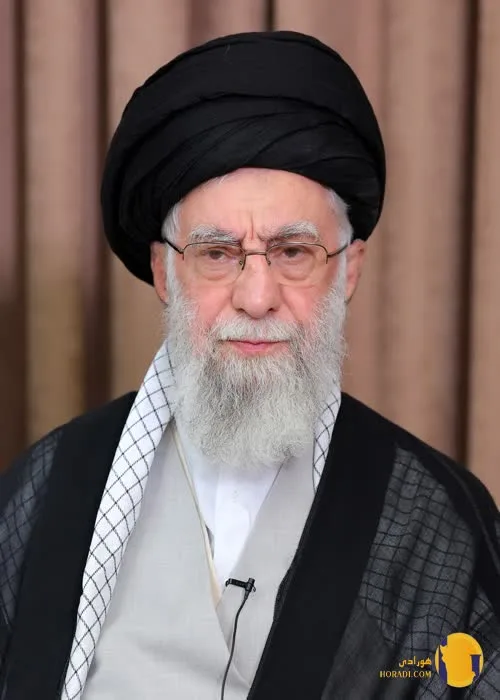
| Date of Birth | 29 Farvardin 1318 (April 19, 1939) |
|---|---|
| Political Party | Islamic Republic Party |
| Spouse(s) | Mansoureh Khojasteh Baqerzadeh |
| Children | 6 children including Seyed Mostafa and Seyed Mojtaba |
| Date of Death | 9 Esfand 1404 (February 28, 2026) |
| Additional Notes | Supreme Leader of Iran and former President |
Growing up in such a family allowed him from an early age to become familiar with the Quran, Islamic ethical principles, and religious sciences, forming the foundation of his intellectual and spiritual development. Alongside his primary education in public schools, he also pursued religious instruction and participated in Quranic sessions and scholarly religious discussions. This period not only strengthened his academic and religious skills but also laid the foundation of his personality toward simplicity, adherence to religious values, and readiness for future social and political responsibilities. Biography of Syed Ali Hosseini Khamenei
Childhood and Primary Education of Syed Ali Hosseini Khamenei
Syed Ali Khamenei spent his childhood in the religious and traditional neighborhoods of Mashhad, where educational and religious atmospheres coexisted. He completed his primary education in the religious and public schools of the city and was recognized from the beginning among his peers and young seminary students as a talented individual. Alongside learning official subjects, he studied the Quran, Hadith, and basics of Islamic sciences, and his interest in philosophy and jurisprudence became evident from adolescence. This period prepared him for entering advanced scholarly and seminary fields and strengthened the foundations of his religious and intellectual knowledge.
His intense interest in religious sciences led him, in his teenage years, to enter the Mashhad seminary, where he conducted extensive studies in jurisprudence, principles of jurisprudence, Quranic interpretation, Hadith, and Islamic philosophy. His academic ability and perseverance quickly distinguished him among young seminary students, facilitating recognition by prominent scholars and entry into scholarly and political circles. This period played a crucial role in shaping Khamenei’s scientific, moral, and managerial personality and laid the foundation for his future activities in religion and politics.
Entering the Qom Seminary and Advanced Religious Studies
One of the major milestones in Syed Ali Khamenei’s life was his entry into the Qom Seminary, recognized as the most important Shiite scholarly center in Iran and the world. During this period, he studied under prominent scholars such as Ruhollah Khomeini, Seyed Hossein Tabatabaei Boroujerdi, and Seyed Mohammad Hossein Tabatabaei. The seminary training in Qom not only enhanced his knowledge of jurisprudence and principles but also familiarized him with the political thought of Ayatollah Khomeini, paving the way for his entry into political and revolutionary activities. This period enabled Khamenei to become acquainted with religious management concepts, community leadership, and the role of the clergy in politics, while developing his scientific and managerial skills.
At the Qom Seminary, he attained high scholarly degrees in jurisprudence and principles of jurisprudence and became known as a seminary teacher and researcher. Simultaneously, he began mentoring young students, some of whom later became prominent religious figures in Iran. This experience in teaching, study, and scholarly activity enabled Khamenei, in addition to his jurisprudential knowledge, to gain a deep understanding of power structures, politics, and the culture of the Islamic society, preparing him to enter the political struggle against the Pahlavi regime.
Beginning of Political Activities and Struggle Against the Pahlavi Regime
Syed Ali Khamenei’s political activity began in the 1340s (1960s), a period when opposition to the Pahlavi government in Iran intensified. As a student of Ayatollah Khomeini, he quickly joined the revolutionary movement and actively participated in activities such as political speeches, organizing religious forces, distributing revolutionary leaflets, and engaging in anti-government cultural efforts. These involvements made Khamenei one of the key figures among religious and revolutionary forces and attracted the attention of the Pahlavi regime’s security institutions.
Due to his extensive activities, he was arrested several times by the Iranian Security Organization (SAVAK) and subjected to interrogation. These arrests and security pressures did not hinder his work; on the contrary, they strengthened his position among revolutionary forces. He was able to establish a network of like-minded religious and political supporters and played a vital role in coordinating and directing revolutionary activities prior to 1357 (1979). This period provided him with critical experience in leadership, resistance to pressure, and understanding domestic politics.
Arrests and Exile During the Pahlavi Era
Syed Ali Khamenei was repeatedly arrested by SAVAK due to his political struggle. Between 1342 and 1357 (1963–1978), he spent several periods in prison and underwent interrogations. These arrests did not stop his activities; rather, they reinforced his status among revolutionary activists and clerics. His close connection with Ayatollah Khomeini and other revolutionary figures made Khamenei a recognized and trusted figure within the Iranian revolutionary movement.
The experience of prison and exile also familiarized him with the security methods of the Pahlavi regime and its intelligence networks, providing him with skills in political analysis and crisis management. This difficult period had a direct impact on his resilient spirit and future decision-making and laid the foundation for his successful leadership during the Islamic Revolution and subsequently in the Islamic Republic.
Role of Syed Ali Khamenei in the 1357 Islamic Revolution
During the Iranian Islamic Revolution (1357 / 1979), Syed Ali Khamenei was one of the most active political and religious figures. He played a key role in guiding and organizing public protests, collaborating with other prominent clerics, and conveying the revolution’s message to various social groups. Utilizing his religious networks and connections in Mashhad and Qom, Khamenei aligned youth and student movements with the goals of the revolution and, alongside other leaders, directed widespread waves of protests against the Pahlavi regime. He also played an effective role in the cultural, educational, and propagandistic activities of the revolution, striving to transmit the message of the Islamic Revolution to all segments of society.
After the victory of the revolution, he quickly entered the new political structure and assumed important responsibilities. These included membership in the Revolutionary Council, representation in the Islamic Consultative Assembly (Parliament), involvement in revolutionary institutions, and participation in establishing the new structures of the Islamic Republic. This period provided him with managerial and political experience, made him a trusted figure among clerics and revolutionaries, and solidified his path for future leadership. His ability to manage crises, coordinate between institutions, and analyze political issues strengthened his position in the power hierarchy of the revolution.
Unsuccessful Assassination Attempt on Syed Ali Khamenei in 1360
One of the most significant events of this period was the unsuccessful assassination attempt on 6 Tir 1360 (June 27, 1981) at Abu Zar Mosque in Tehran. An explosion severely injured Khamenei, causing permanent damage to his right hand. This attempt, carried out by opposition groups, including elements of the People’s Mujahedin Organization of Iran (MEK), demonstrated the danger and sensitivity of his position at that time. Despite the severity of the explosion and his injuries, Khamenei survived and, with patience and effort, completed a long period of recovery.
This incident did not weaken his political and social standing; rather, it increased the trust and respect of the people and revolutionary forces toward him. The failed assassination reinforced his reputation and status among clerics and political activists and demonstrated his ability to manage crises and confront security threats. Enduring such events strengthened his leadership skills, personal resilience, and political insight, laying a firm foundation for Iran’s future leadership under his guidance.
Important Responsibilities of Syed Ali Khamenei in the Early Years of the Islamic Republic of Iran
After the victory of the Islamic Revolution in 1357 (1979), a new political structure was established in Iran, and revolutionary forces assumed positions across the government. Syed Ali Khamenei, as one of the active clerics trusted by Ruhollah Khomeini, quickly entered the managerial structure of the Islamic Republic. In the early years of the revolution, he held important responsibilities, including membership in the Revolutionary Council, deputy of the Ministry of Defense, and representation of the people of Tehran in the Islamic Consultative Assembly (Parliament). These responsibilities allowed Khamenei to become directly familiar with the power structure, security issues, and internal challenges of the country, gaining significant political experience.
During this period, he was also appointed as Ayatollah Khomeini’s representative in the Supreme Defense Council and played an important role in coordinating military affairs. This council was responsible for managing the country’s defense in critical situations, especially after the start of the Iran-Iraq War in 1359 (1980). Khamenei’s presence in this council familiarized him with military commanders and major defense decisions and involved him in the management of the war. These experiences had a significant impact on shaping his strategic and security perspectives and paved the way for more important roles in the future.
Presidency of Syed Ali Khamenei (1360–1368 / 1981–1989)
In 1360 (1981), following the assassination of Mohammad Ali Rajai, presidential elections were held, and Syed Ali Khamenei was elected as the third President of the Islamic Republic of Iran. His election took place at a time when the country faced serious crises, including war, internal instability, and external pressures. His presidency is considered one of the most sensitive periods in the history of the Islamic Republic, as the country was engaged in a full-scale war with Iraq and required strong political and military management.
During his presidency, Khamenei focused on maintaining internal cohesion, strengthening the armed forces, and managing the country’s resources. In collaboration with the government and military institutions, he worked to enhance Iran’s defensive capabilities and prevent Iraqi advances. Important structures in the security, economic, and political sectors were also consolidated during this period. His presidency lasted for two consecutive terms until 1368 (1989), demonstrating the political structure’s confidence in his management.
Role of Syed Ali Khamenei in the Iran-Iraq War
The Iran-Iraq War, which lasted from 1359 to 1367 (1980–1988), was one of the most important events during Khamenei’s presidency. The war had a profound impact on Iran’s political, economic, and military structure. As president, Khamenei played a key role in coordinating between military institutions, the government, and the leadership, participating in major decisions regarding the war. He regularly attended Supreme Defense Council meetings and contributed to the formulation of defense strategies.
The war strengthened Iran’s military institutions, including the Islamic Revolutionary Guard Corps (IRGC). Khamenei supported the development of these institutions and believed that Iran’s military independence was essential for national security. The war also shaped Iran’s long-term defense policies, which continued during his later leadership. Managing the country under wartime conditions profoundly influenced Khamenei’s security and strategic perspectives.
Election of Syed Ali Khamenei as Leader of the Islamic Republic of Iran in 1368
On 14 Khordad 1368 (June 4, 1989), after the death of Ruhollah Khomeini, the Assembly of Experts for Leadership was tasked with selecting the new leader of the Islamic Republic. After reviewing various candidates, the Assembly elected Syed Ali Khamenei as the second Leader of the Islamic Republic of Iran. This election marked one of the most important turning points in the history of the Islamic Republic, as the country’s leadership was transferred to an individual with presidential experience and extensive revolutionary activities.
Khamenei’s election as leader elevated him to the highest political and religious position in the country. According to the Iranian Constitution, the leader holds broad powers, including command of the armed forces, setting general policies for the country, and supervising various branches of government. Since his election, Khamenei has held the longest leadership term in the history of the Islamic Republic and has played a decisive role in shaping the country’s political path.
Powers and Position of the Leader of the Islamic Republic of Iran
According to the Constitution of the Islamic Republic of Iran, the leader is the highest-ranking authority in the country and possesses extensive powers across various domains. These powers include command of the armed forces, appointment of military commanders, determination of the country’s general policies, and supervision of the performance of the three branches of government. The leader also plays a significant role in defining the overall direction of foreign policy and national security.
This position has made the leader central in Iran’s power structure. All major institutions, including the army, the Islamic Revolutionary Guard Corps, and other security organizations, operate under the leader’s supervision. This structure concentrates power in the office of the leader and makes his role critical in determining the country’s political trajectory.
Domestic and Cultural Policies During Leadership
Syed Ali Hosseini Khamenei, throughout his leadership, has placed special emphasis on maintaining stability, security, and internal cohesion in the country. Focusing on security, judicial, and executive institutions, he has worked to prevent any political, social, or cultural crises and to guide the nation toward sustainable development. Combating administrative corruption, strengthening social justice, and strictly implementing laws have been among his main priorities in domestic policy and are consistently emphasized in his speeches and official messages. Khamenei also believes in the role of the younger generation and educated individuals in shaping Iran’s future and emphasizes their moral and religious upbringing alongside the development of scientific and technical skills, asserting that the country’s future directly depends on the quality of educating the next generation and preserving Islamic and national values.
In the cultural sphere, the Leader of the Islamic Republic has focused on preserving Iran’s Islamic and national identity, designing multiple programs to promote Islamic culture, expand religious education, and strengthen revolutionary media. Simultaneously, he has prioritized confronting Western cultural invasion and developing Islamic digital and media content, presenting family, social ethics, and self-confidence as the core pillars of Iranian society. Special attention to Islamic art, digital media, educational networks, and raising cultural awareness among the people is part of his policies to reinforce national identity and counter foreign cultural influence.
Foreign Policy and Iran’s Regional Role
In foreign policy, Syed Ali Khamenei emphasizes independence, resistance, and non-dependence on global powers. He consistently believes that Iran should follow an independent path in international relations and stand firm against international pressures and sanctions. Supporting oppressed nations, especially the Palestinian people and resistance groups in the region, is a fundamental principle of his foreign policy. Under Khamenei’s leadership, Iran has also sought to establish strong strategic and economic relations with independent countries and resistance axis nations, including Russia and China, developing these relations based on mutual interests and respect.
Khamenei, emphasizing resistance against international pressures and economic self-sufficiency, has formulated policies to develop domestic industries, particularly in technology, energy, and defense. He believes that economic resilience and domestic capacity development are key to maintaining Iran’s national independence, and for this reason, foreign policy and national economy have been designed in coordination to simultaneously secure national security and strategic interests. This approach has enabled Iran, over the past two decades, to become an important regional and international actor while maintaining its position against external pressures.
Role of Syed Ali Khamenei in Iran’s Nuclear Program
One of the key pillars of Khamenei’s leadership has been the development of Iran’s nuclear program. He has always regarded it as the country’s legal right and a component of national independence, emphasizing that the use of nuclear energy must remain solely peaceful. Khamenei has established clear red lines for the program and has directly overseen the development of related technologies and nuclear research. From his perspective, the nuclear program is not only a tool for scientific advancement but also a symbol of Iran’s independence and national capability on the international stage.
In international negotiations, Khamenei has maintained a principled and resistant approach, consistently pursuing nuclear development as a strategic pillar of the country’s defense and economic policy in accordance with national interests. He also emphasizes self-sufficiency in defense, energy, and information technology industries, believing these measures strengthen the foundations of Iran’s national power and security. The development of the nuclear program under the direct guidance of the Leader reflects a combination of resistance, independence, and scientific advancement for the country.
Challenges and Criticisms During Leadership
Despite the broad impact of Syed Ali Khamenei’s leadership, it has faced numerous challenges and criticisms. Opponents have criticized the concentration of power in the leadership position, restrictions on political and media freedoms, and the treatment of civil activists. Some social activists and political groups have called for greater transparency, wider public participation in major decisions, and a reduction in the concentration of power at the highest levels. These criticisms have been particularly pronounced in economic, social, and cultural decisions, sparking extensive discussions both domestically and internationally.
On the other hand, economic fluctuations, inflation, unemployment, and infrastructure problems in certain periods have increased public dissatisfaction. However, Khamenei’s supporters argue that his concentration of power and resistance-oriented policies have preserved security, political stability, and national independence against external pressures and international threats. His long experience in crisis management, confronting regional and global pressures, and maintaining political cohesion has strengthened the foundations of the Islamic Republic of Iran’s domestic and foreign policies.
Works, Writings, and Intellectual Views
In addition to his political activities, Syed Ali Khamenei has authored numerous works in the fields of jurisprudence, Islamic politics, ethics, and culture. His most important work is the book Velayat-e Faqih (Guardianship of the Islamic Jurist), which elaborates on the theory of Islamic governance and the role of the Supreme Leader. Additionally, his speeches, messages, and letters are used as study and educational resources on politics, culture, and jurisprudence in Iran and the region. Khamenei’s works emphasize independence, resistance against foreign domination, and strengthening Islamic and national identity.
His intellectual views focus on dynamic ijtihad, innovation in jurisprudence, and responsiveness to contemporary needs. Khamenei believes that Islamic jurisprudence must be adaptable to present-day conditions and capable of addressing social, cultural, and economic issues. These works are recognized as reference sources for seminary students, scholars, and politicians in Iran and the region, and they have had a significant impact on shaping the cultural, educational, and social policies and approaches of the Islamic Republic of Iran.
Current Status and Historical Position
To this day, Syed Ali Khamenei remains at the head of the Islamic Republic of Iran, influencing the country’s politics, culture, and security for over three decades. He considers the younger generation as the nation’s main asset and emphasizes ethical education, technological development, and the training of specialized human resources. His active involvement in major national decision-making, combined with his managerial ability and extensive experience, has established his position as one of the most influential leaders in contemporary Iranian history.
From a historical perspective, Khamenei has experienced one of the longest leadership periods in the modern world, and his role in maintaining independence, political stability, national identity, and national security is notable. His policies, intellectual works, cultural activities, and domestic and foreign management remain an important legacy in contemporary Iranian history, with visible effects for future generations in political, cultural, and social spheres.
Martyrdom of Ayatollah Syed Ali Hosseini Khamenei
On the morning of 9 Esfand 1404 (February 28, 2026), following a large-scale joint aerial operation by the United States and Israel targeting political and military objectives in Iran, international media and several credible global sources reported that Ayatollah Syed Ali Hosseini Khamenei, the Leader of the Islamic Republic of Iran, was killed during a direct attack on his official office and residence in Tehran. According to these reports, the attack occurred in the early hours of the day, and the remains of Iran’s leader, along with several close associates and family members, were identified and confirmed by relevant authorities. Western news and analytical sources also stated that the operation was carried out with intelligence and military cooperation between the United States and Israel, with the declared aim of eliminating one of the country’s highest-ranking political figures. These reports were initially published by international media and subsequently received widespread attention and analysis in official regional and global outlets.
The martyrdom of Ayatollah Khamenei, who held the highest position in the Islamic Republic for more than three decades and played a decisive role in Iran’s domestic, foreign, and cultural policies, has elicited profound and extensive reactions across the Islamic world. Millions of Muslims worldwide, through messages of condolence, memorial ceremonies, and mourning gatherings, have interpreted this event as symbolic of a critical period in contemporary political and social history. Many political and religious analysts believe that the absence of a figure with such a strategic position in Iran’s political structure could have far-reaching effects on regional stability, international relations, and power dynamics in the Middle East, as his name had been closely associated with policies of resistance, independence, and national identity, and his presence held both symbolic and practical significance for large segments of Iranian society and the broader Islamic world.