Attack on Shajareh Tayyebeh School Minab 168 (27 February 2026)

On February 28, 2026, the Shajareh Tayyebeh Primary School in Minab, Hormozgan Province, southern Iran, was struck during the opening hours of the war involving the United States, Israel, and Iran. The school was reportedly in session at the time of the attack, and the strike caused the collapse of major parts of the school building, resulting in a large number of civilian deaths and injuries.
Minab 168
| Time of attack | 27 February 2026 |
|---|---|
| Province | Hormozgan |
| Fatalities | 156 people |
| Injured | 96 people |
| Attacker | United States Armed Forces |
| Location | Shajareh Tayyebeh School |
The incident quickly became one of the most widely reported attacks involving an educational facility during the conflict. Iranian authorities attributed the strike to the United States and Israel, while both countries initially denied or disputed responsibility. Subsequent reporting, including investigations cited by Human Rights Watch and Reuters, pointed toward a possible U.S. strike, while a final independent determination of responsibility remained subject to investigation.
Because casualty figures, responsibility, and some details of the targeting sequence have been reported differently by different sources, the incident should be examined through documented evidence as well as clearly attributed claims.
When Did the Minab School Attack Happen?
The attack occurred on February 28, 2026, in Minab, a city in Hormozgan Province on Iran’s southern coast. The date is significant because the strike took place during the opening phase of the wider U.S.-Israeli military campaign against Iran.
Human Rights Watch reported that the school was struck before midday while classes were in progress. Its investigation reviewed photographs, videos, satellite imagery, and publicly available statements concerning the attack.
UNICEF also reported that the strike occurred while classes were in session and that most of those killed were schoolchildren between approximately 7 and 12 years old.
Where Was Shajareh Tayyebeh School Located?
Shajareh Tayyebeh Primary School was located in the city of Minab, near an Islamic Revolutionary Guard Corps (IRGC) Naval Forces compound.
The school’s proximity to the military installation became an important part of subsequent investigations because the broader area contained military facilities. However, Human Rights Watch reported that the school itself was physically separated from the surrounding compound by walls and had a separate entrance from the street.
Human Rights Watch also found no evidence indicating that the school was being used for military purposes. At the same time, the organization noted that it was unable to independently interview witnesses and relatives because of internet shutdowns and communication restrictions following the attack.
This distinction is important when assessing the legal status of the school. The presence of a military facility nearby does not automatically make an adjacent civilian educational building a military objective under international humanitarian law.
What Happened During the Attack?
According to available reporting and open-source investigations, multiple structures in the surrounding area were struck.
Human Rights Watch analyzed 14 photographs and videos recorded immediately after the attack or during rescue operations, along with additional material from funerals and approximately 40 publicly available satellite images covering the area before and after the incident. The organization identified multiple impact sites and concluded that the pattern of damage was consistent with the use of guided explosive weapons.
The school building suffered catastrophic structural damage. Roof sections and other parts of the building collapsed, trapping students and school personnel beneath the debris.
Some accounts have described the incident as involving multiple strikes occurring within a relatively short period. However, descriptions such as a deliberate “double-tap” attack against rescuers should be treated cautiously unless supported by independently verified evidence establishing the sequence, timing, and intent of each strike.
Casualties and Why the Numbers Differ
The number of people killed in the Minab school attack has been reported differently by various sources.
Early reports and Iranian official statements cited a death toll of approximately 168 people. On March 5, UNICEF stated that 168 girls were reported killed in the strike on the Shajareh Tayyebeh girls’ elementary school. UNICEF also reported that most of the victims were schoolchildren.
Later documentation produced a different figure. A subsequent account from Minab authorities reported 156 identified victims, including 120 students and 36 adults. Human Rights Watch has emphasized that restrictions on communication and access to witnesses made it difficult to independently verify the precise number and identities of all those killed.
For this reason, the casualty figure should not be presented as an uncontested single number without explaining the source behind it.
A careful description is that official and international reports have cited casualty figures ranging from at least 156 identified victims to approximately 168 reported deaths, with the exact composition of the victims remaining dependent on the source and methodology used.
Who Were the Victims?
The victims were predominantly civilians, with a large number being schoolchildren.
UNICEF reported that most of those killed were children between approximately 7 and 12 years old. Later documentation identifying 156 victims listed 120 students among those killed, alongside teachers and other adults.
The attack therefore resulted in extensive civilian casualties inside an educational facility that was reportedly operating normally at the time.
Reports and investigations have also documented the deaths of teachers and other adults who were present at the school.
Was the School a Military Target?
The location of Shajareh Tayyebeh School near an IRGC military compound has been central to the debate surrounding the attack.
Human Rights Watch found that the school was separated from the military compound by physical barriers and had its own entrance. The organization also reported finding no evidence that the school itself was being used for military purposes.
At the same time, the surrounding area contained military facilities that were reportedly targeted during the broader operation.
This creates an important distinction: the existence of a military installation near a school does not by itself establish that the school was a lawful military target. Determining whether an attack complied with international humanitarian law requires examining the intended target, available intelligence, precautions taken, proportionality, and the circumstances known to the attacking force at the time.
Who Was Responsible for the Attack?
Responsibility for the strike became one of the most disputed aspects of the incident.
Iranian authorities attributed the attack to the U.S.-Israeli military operation. The United States and Israel did not initially acknowledge responsibility for striking the school. Human Rights Watch reported that an Israeli military spokesperson said the Israeli military was not aware of any Israeli strikes in the area.
On March 11, reporting cited by Human Rights Watch indicated that an ongoing U.S. military investigation had preliminarily determined that a U.S. Tomahawk missile was responsible for the strike. Human Rights Watch subsequently reported that the findings raised questions about the use of outdated targeting information.
Reuters also reported that U.S. military sources had acknowledged preliminary findings pointing toward American responsibility, while emphasizing that the investigation had not yet reached its final conclusions.
Therefore, the most accurate formulation is that subsequent investigations and reporting pointed toward U.S. responsibility, but the circumstances and legal accountability surrounding the strike remained subjects of investigation.
Did the Attack Involve Outdated Targeting Information?
One of the major issues raised after the attack was whether outdated intelligence contributed to the school being struck.
Human Rights Watch cited reporting that a U.S. military investigation had preliminarily linked the strike to outdated targeting information. The organization said that, if confirmed, the findings would raise serious questions about whether sufficient precautions had been taken to distinguish the school from nearby military facilities.
This issue is particularly significant because the school was reportedly a functioning educational facility with children present at the time of the attack.
However, determining exactly what intelligence was available to military planners and operators, what information was used to select the target, and when that information was last updated requires access to classified operational records that have not been fully made public.
International and Human Rights Reactions
The attack attracted significant international attention because of the large number of children reportedly killed.
UNICEF expressed deep concern over the deaths of children in Iran and specifically identified the Shajareh Tayyebeh school strike among the major child-casualty incidents. The organization emphasized that children and schools are protected under international humanitarian law.
Human Rights Watch called for a thorough investigation into the attack and said that the incident should be investigated as a potential war crime. Its assessment focused on the distinction between the civilian school and the nearby military compound, the apparent use of guided weapons, and the need to establish what the attacking force knew about the site before the strike.
The United Nations also began examining the incident. Reuters reported in March that a member of the UN Fact-Finding Mission on Iran said the body was seeking access to investigate the strike independently.
International Humanitarian Law and the Minab School Attack
International humanitarian law provides protection to civilians and civilian objects during armed conflict. Educational facilities are generally civilian objects and may lose that protection only under specific circumstances, such as when they are being used for military purposes.
The legal assessment of the Minab attack therefore involves several questions:
- Was the school being used for military purposes?
- What was the intended target of the strike?
- What information did the attacking force possess about the location and function of the school?
- Were feasible precautions taken to avoid or minimize civilian casualties?
- Was the expected civilian harm excessive in relation to the anticipated military advantage?
- Was the attack directed against a lawful military objective?
Human Rights Watch stated that it had found no evidence that the school itself was being used for military purposes and called for a thorough investigation into whether the attack violated international humanitarian law.
Whether the incident ultimately meets the legal definition of a war crime is a matter for competent investigative and judicial authorities to establish on the basis of evidence.
Search and Rescue Operations
Following the strike, rescue workers and local residents worked to recover people from the collapsed school building.
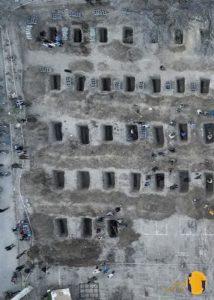
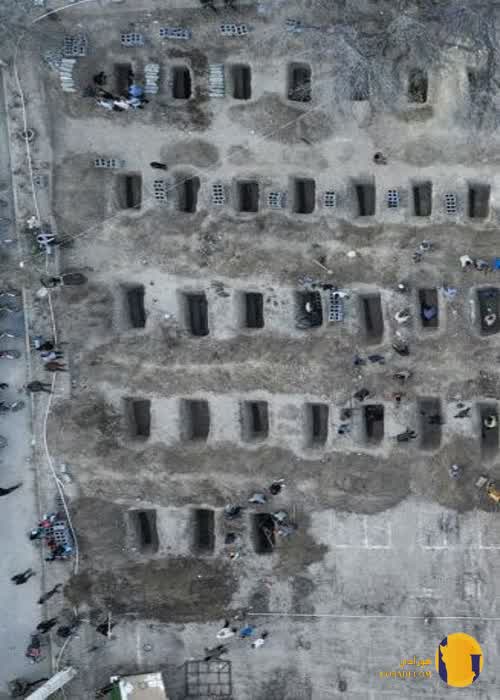
Human Rights Watch reviewed visual material from the immediate aftermath and rescue operations, as well as satellite imagery of the nearby Minab Hermud cemetery. The organization documented extensive preparations for burials following the attack but noted that it could not independently establish that every newly prepared grave corresponded to a victim of the school strike.
The rescue and recovery operation continued for an extended period as responders searched through the collapsed structure.
Why the Minab School Attack Became Internationally Significant
The Minab incident became a major international focus for several reasons.
First, the strike occurred at a functioning primary school during school hours, resulting in a large number of child casualties.
Second, the school was located near a military installation, creating questions about target selection and the separation between military and civilian facilities.
Third, subsequent reporting raised the possibility that outdated intelligence had contributed to the selection of the target.
Finally, the discrepancy between early casualty figures and later identified victim lists demonstrated the difficulty of establishing a definitive casualty count during an active military conflict and under severe communication restrictions.
Current Understanding of the Minab School Attack
Based on publicly available investigations and reporting, several aspects of the incident are relatively well documented: the attack occurred on February 28, 2026, the Shajareh Tayyebeh School was struck while classes were reportedly in session, the building suffered catastrophic damage, and a large number of civilians, predominantly children, were killed or injured.
Other questions remain more complex, particularly the precise sequence of strikes, the intelligence used for targeting, the final casualty count, and the legal responsibility of individuals or states.
Later reporting and investigations have pointed toward a U.S. strike involving a Tomahawk missile, while questions concerning the targeting process and potential violations of international humanitarian law have remained under investigation.
The Minab school attack therefore remains an important case for examining civilian protection, military targeting practices, the reliability of intelligence during armed conflict, and the legal obligations of parties conducting air and missile operations near populated areas.