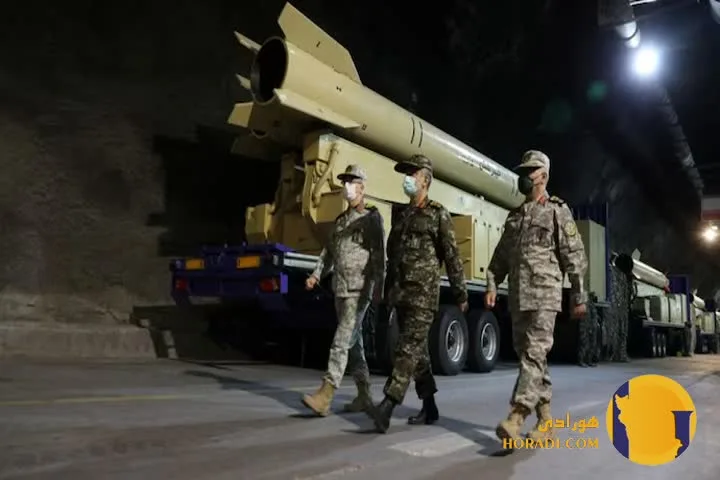
Iranian Missiles Development Capabilities and Strategic Role

Iranian Missiles Development Capabilities and Strategic Role
Iran’s missile program is one of the most advanced and controversial military initiatives in the Middle East. Over the past four decades, Iran has invested heavily in developing ballistic and cruise missiles to enhance its national defense, deter adversaries, and project regional influence. These missiles have become a central pillar of Iran’s military doctrine, particularly given the country’s limited access to modern air power due to international sanctions. This article examines the origins, evolution, technical capabilities, and strategic significance of Iranian missiles. Horadi
Historical Background of Iran’s Missile Program
Iran’s missile development began in earnest during the Iran–Iraq War (1980–1988), when Iraq used Scud missiles to strike Iranian cities. Iran initially lacked similar capabilities and relied on imported missiles from countries such as Libya, Syria, and North Korea. These early experiences highlighted Iran’s vulnerability and motivated the leadership to develop a domestic missile industry.
After the war, Iran prioritized self-sufficiency in military technology. With foreign assistance and reverse engineering, Iran gradually built its own missile infrastructure. By the 1990s and early 2000s, Iran had begun producing indigenous missiles and expanding their range, accuracy, and payload capacity.
Types of Iranian Missiles
Iran has developed a wide range of missile systems, which can be broadly categorized into ballistic missiles, cruise missiles, and space launch vehicles.
Ballistic Missiles
Ballistic missiles form the backbone of Iran’s missile arsenal. These missiles follow a high-arc trajectory and can deliver conventional or potentially unconventional payloads over long distances.
Some of Iran’s notable ballistic missiles include:
Shahab-3:
The Shahab-3 is one of Iran’s most well-known medium-range ballistic missiles. It has an estimated range of approximately 1,300 to 2,000 kilometers, allowing it to reach targets across the Middle East. The missile is based on North Korean Nodong technology but has been modified and improved domestically.
Sejjil:
The Sejjil missile represents a major technological advancement because it uses solid fuel instead of liquid fuel. Solid-fuel missiles can be launched more quickly and are easier to store and transport. The Sejjil has an estimated range of about 2,000 kilometers.
Fateh-110:
This is a short-range ballistic missile known for its improved accuracy. It has a range of approximately 300 kilometers and is designed for tactical battlefield use.
Khorramshahr:
The Khorramshahr missile is believed to have a range of up to 2,000 kilometers and can carry a relatively heavy payload. It represents one of Iran’s more powerful missile systems.
Cruise Missiles
Cruise missiles fly at lower altitudes and use jet engines, making them harder to detect and intercept. Iran has invested significantly in cruise missile development to complement its ballistic missile forces.
Soumar:
The Soumar cruise missile is believed to be based on the Russian Kh-55 missile. It is designed for long-range precision strikes.
Hoveyzeh:
The Hoveyzeh cruise missile reportedly has a range exceeding 1,300 kilometers and is designed to strike strategic targets with precision.
Anti-Ship Missiles
Iran has also developed anti-ship missiles to defend its coastline and threaten naval forces in strategic waterways such as the Persian Gulf and the Strait of Hormuz.
Examples include:
-
Noor missile
-
Qader missile
-
Khalij Fars missile
These missiles are designed to target naval vessels and enhance Iran’s asymmetric warfare capabilities.
Solid Fuel vs Liquid Fuel Technology
One of the key technological developments in Iran’s missile program is the transition from liquid-fuel missiles to solid-fuel missiles. Solid fuel offers several advantages:
-
Faster launch preparation time
-
Easier storage and transportation
-
Increased survivability in combat
-
Reduced vulnerability to pre-emptive strikes
This transition significantly improves Iran’s operational readiness.
Precision and Guidance Systems
Iran has invested heavily in improving missile accuracy. Modern Iranian missiles use advanced guidance systems such as:
-
Inertial navigation systems
-
Satellite navigation assistance
-
Terminal guidance systems
These improvements increase the probability of hitting intended targets and enhance military effectiveness.
Strategic Role in Iran’s Defense Doctrine
Missiles play a central role in Iran’s defense strategy. Because Iran’s air force operates many aging aircraft, missiles provide an alternative means of deterrence and strike capability.
Iran’s missile strategy focuses on several key objectives:
Deterrence:
Missiles serve as a deterrent against potential military attacks by regional and global adversaries.
Asymmetric Warfare:
Iran uses missiles to offset technological disadvantages compared to more advanced military powers.
Regional Influence:
Missile capabilities enhance Iran’s strategic influence across the Middle East.
Indigenous Production and Self-Sufficiency
Due to international sanctions, Iran has focused on developing its domestic defense industry. Iranian engineers and scientists have built missile production facilities, testing sites, and research centers.
Self-sufficiency allows Iran to:
-
Reduce dependence on foreign suppliers
-
Continue development despite sanctions
-
Improve and modify missile designs independently
This domestic capability is considered one of Iran’s major military achievements.
Missile Defense and Countermeasures
Iran is also developing technologies to improve missile survivability, including:
-
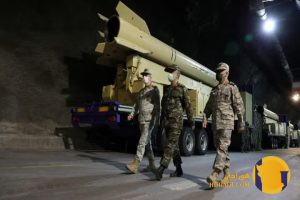
Mobile launch platforms
-
Underground missile silos
-
Decoys and countermeasures
These measures make missile systems harder to detect and destroy.
International Concerns and Controversy
Iran’s missile program has been a source of international concern. Critics argue that missile development could destabilize the region, while Iran maintains that its missile program is purely defensive.
International negotiations and sanctions have attempted to limit aspects of Iran’s military development, but Iran continues to advance its missile capabilities.
Recent Developments and Future Outlook
Iran continues to develop newer and more advanced missiles, focusing on:
-
Improved accuracy
-
Longer ranges
-
Faster launch readiness
-
Advanced guidance systems
Emerging technologies such as hypersonic glide vehicles and improved cruise missiles may shape the future of Iran’s missile program.