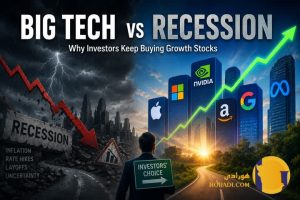

Why US Tech Stocks Are Sliding What the Latest Inflation Data Means for Your Portfolio

The recent selloff in U.S. technology stocks has raised concerns among both retail and institutional investors. After a powerful rally fueled by artificial intelligence, cloud computing, and semiconductor demand, many of the market’s biggest winners are now facing increased volatility.Finance News
The primary catalyst behind the latest market weakness is inflation. New economic data suggests that price pressures remain stronger than expected, forcing investors to reconsider how long interest rates may stay elevated. As a result, growth-oriented sectors such as technology have become particularly vulnerable.
While market pullbacks can feel uncomfortable, they also provide an opportunity to understand how macroeconomic forces impact investment portfolios. Investors who understand the relationship between inflation, interest rates, and stock valuations are often better prepared to navigate uncertain markets.
In this article, we will examine why U.S. tech stocks are falling, how the latest inflation data is influencing market sentiment, and what investors should consider when positioning their portfolios for the second half of 2026.
Key Takeaways
- Inflation remains one of the most important market drivers in 2026.
- Higher interest rates create valuation pressure for growth stocks.
- Technology companies are especially sensitive to rising yields.
- AI-related stocks are experiencing profit-taking after significant gains.
- Diversification remains critical during volatile market periods.
- Long-term investors should focus on fundamentals rather than headlines.
- Treasury yields are becoming increasingly competitive with equities.
- Federal Reserve policy remains a key market catalyst.
Why Technology Stocks Are Falling
Technology stocks have traditionally benefited from low interest rates and abundant liquidity. During periods of easy monetary policy, investors are often willing to pay premium valuations for companies expected to generate significant future earnings.
That environment has changed considerably over the past year. Inflation has remained above the Federal Reserve’s preferred target, forcing policymakers to maintain a cautious stance regarding monetary policy.
When investors believe interest rates may remain elevated, the value of future earnings declines. Since many technology companies derive a large portion of their valuation from expected future growth, they tend to experience greater downside pressure than mature industries.
This valuation adjustment does not necessarily indicate weakness in the underlying businesses. Instead, it reflects changing market expectations regarding future economic conditions and the cost of capital.
Understanding the Latest Inflation Data
Inflation data continues to dominate financial market discussions. Every Consumer Price Index report has the potential to shift expectations about Federal Reserve policy and influence investor behavior across asset classes.
The latest inflation figures indicate that consumer prices remain stubbornly elevated. Although some categories have shown signs of moderation, overall inflation remains higher than many economists expected at the beginning of the year.
Persistent inflation creates challenges for policymakers. The Federal Reserve must balance the need to control rising prices while avoiding excessive pressure on economic growth and employment.
For investors, inflation is important because it directly influences interest rates, borrowing costs, corporate profits, and ultimately stock market valuations.
How Interest Rates Impact Tech Valuations
Interest rates play a central role in equity valuation models. Investors use discounted cash flow analysis to estimate what future profits are worth in today’s dollars.
When interest rates rise, future cash flows become less valuable. This mathematical reality disproportionately affects high-growth companies that are expected to generate a large share of their earnings many years into the future.
Technology firms often trade at higher valuation multiples because investors expect substantial future growth. Rising rates challenge those assumptions and frequently lead to multiple compression.
As a result, even companies that continue delivering strong revenue growth may experience stock price declines if market participants become more concerned about interest rates.
The AI Rally Is Facing a Reality Check
Artificial intelligence remains one of the most important technological trends of the decade. However, investor enthusiasm pushed many AI-related stocks to historically elevated valuations during the recent rally.
As inflation concerns returned, investors began reassessing whether those valuations accurately reflected future growth prospects. This reassessment has triggered profit-taking across several high-profile technology names.
Short-term corrections are common after major rallies. Markets rarely move higher in a straight line, especially when investor expectations become extremely optimistic.
While AI remains a powerful long-term investment theme, the current environment demonstrates that even transformative technologies are not immune to macroeconomic pressures.
Treasury Yields Are Becoming More Attractive
One reason technology stocks are facing increased competition is the rise in Treasury yields. Government bonds now offer investors higher returns than they did during the low-rate environment of previous years.
When risk-free yields increase, investors have more alternatives available. Some institutional investors choose to reduce equity exposure and allocate additional capital toward fixed-income investments.
Higher Treasury yields also influence stock valuation models. The increased return available from government securities raises the hurdle rate investors use when evaluating equities.
This dynamic has contributed to a broader market rotation away from some of the highest-valued growth stocks and toward sectors offering stronger current cash flows.
Sector Rotation Is Reshaping the Market
Market leadership changes frequently throughout economic cycles. The sectors that outperform during one environment may underperform when conditions shift.
Recent market activity suggests that investors are increasingly favoring industries that historically perform better during periods of elevated inflation. Healthcare, energy, utilities, and consumer staples have attracted renewed interest.
These sectors often benefit from more predictable demand and stronger pricing power. Their earnings profiles can appear more attractive when economic uncertainty increases.
Technology remains a critical component of the global economy, but short-term investor preferences can shift significantly based on changing macroeconomic conditions.
Portfolio Strategies for Investors
Periods of market volatility often test investor discipline. Emotional reactions can lead to poor decisions that negatively impact long-term returns.
Diversification remains one of the most effective risk-management strategies available. A balanced portfolio can help reduce the impact of weakness in any single sector.
Investors should also review their risk tolerance regularly. Market conditions evolve, and portfolio allocations should remain aligned with individual financial objectives.
Maintaining a long-term perspective is particularly important during corrections. Many successful investors view market pullbacks as opportunities rather than threats.
What the Federal Reserve Will Be Watching
Federal Reserve officials continue monitoring several important economic indicators. Inflation remains the primary focus, but employment, consumer spending, and wage growth are also closely analyzed.
If inflation remains elevated, policymakers may choose to keep interest rates higher for longer than markets currently anticipate. Such a scenario could create additional pressure for growth-oriented sectors.
Conversely, evidence of sustained disinflation could support a more accommodative policy stance in the future. That outcome would likely improve sentiment toward technology stocks.
Investors should expect continued volatility as markets react to new economic data and evolving policy expectations.
Why Long-Term Investors Should Stay Focused
Short-term market movements often dominate headlines, but long-term investment success typically depends on fundamentals rather than daily price fluctuations.
Many of today’s leading technology companies possess strong balance sheets, significant competitive advantages, and substantial cash flow generation capabilities.
Although inflation and interest rates can influence valuations in the near term, innovation remains a powerful driver of long-term value creation.
Investors who focus on business quality, earnings growth, and disciplined portfolio management are often better positioned to navigate challenging market environments.
Final Verdict
The recent decline in U.S. technology stocks reflects a combination of elevated inflation, rising Treasury yields, and uncertainty surrounding future Federal Reserve policy. These factors have prompted investors to reassess valuations across the technology sector.
While the current environment presents challenges, it does not necessarily signal the end of the long-term technology growth story. Innovation, artificial intelligence, cloud computing, and digital transformation continue to support future opportunities.
The most effective approach for investors is maintaining diversification, focusing on fundamentals, and avoiding emotional decision-making during periods of heightened volatility.
As economic conditions evolve throughout 2026, staying informed and maintaining a disciplined investment strategy will remain essential for achieving long-term financial goals.
Frequently Asked Questions
Why are U.S. tech stocks falling in 2026?
Technology stocks are facing pressure due to elevated inflation, rising Treasury yields, and expectations that interest rates may remain higher for longer.
How does inflation affect stock market performance?
Inflation influences interest rates, consumer spending, corporate profitability, and investor sentiment, all of which impact stock prices.
Are AI stocks still a good long-term investment?
Many investors believe artificial intelligence remains a strong long-term growth trend, although valuations and short-term volatility remain important considerations.
Should investors sell technology stocks during market corrections?
Investment decisions should depend on financial goals, risk tolerance, and company fundamentals rather than short-term market fluctuations.
What sectors tend to perform better during inflation?
Energy, healthcare, consumer staples, and utilities have historically demonstrated relative resilience during periods of elevated inflation.