
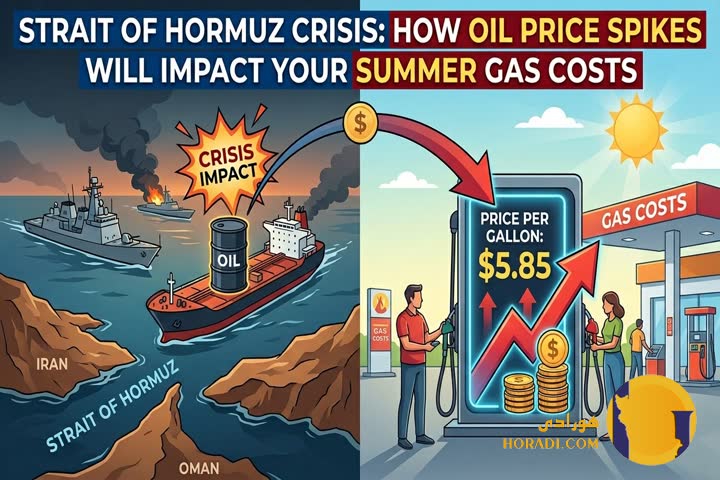
Strait of Hormuz Crisis How Oil Price Spikes Will Impact Your Summer Gas Costs

The Strait of Hormuz remains one of the world’s most critical energy chokepoints, handling a significant share of global oil exports every day. Any disruption in the region immediately captures the attention of investors, policymakers, and consumers alike. Market News
As geopolitical tensions continue to create uncertainty in the Middle East, energy markets are closely watching developments that could impact global crude oil supply. Even the threat of disruption can trigger sharp movements in oil prices.
For American households, rising crude prices often translate into higher gasoline costs within weeks. With the peak summer driving season underway, many families are wondering how a potential Strait of Hormuz crisis could affect their travel budgets.
Key Takeaways
- The Strait of Hormuz handles roughly one-fifth of global oil trade.
- Oil prices typically rise when supply disruptions are feared.
- Higher crude oil prices often lead to more expensive gasoline in the United States.
- Summer travelers could face increased fuel costs if tensions escalate.
- Energy markets remain highly sensitive to developments in the Middle East.
- The economic impact depends on the duration and severity of any disruption.
Why the Strait of Hormuz Matters to Global Energy Markets
The Strait of Hormuz connects the Persian Gulf to international shipping routes and serves as a vital passage for crude oil exports. Energy-producing nations rely heavily on this corridor to reach customers around the world.
Countries including Saudi Arabia, Iraq, Kuwait, and the United Arab Emirates transport massive volumes of oil through the waterway. Any threat to maritime traffic can create concerns about global supply stability.
Commodity traders monitor the region continuously because oil prices react quickly to geopolitical developments. Even temporary disruptions can cause volatility across energy markets and financial sectors.
When supply risks increase, buyers often bid prices higher to secure future deliveries. This reaction can spread throughout global markets before any actual shortage occurs.
Understanding the Current Strait of Hormuz Crisis
Recent geopolitical tensions have renewed concerns about shipping security in the Gulf region. Market participants are evaluating potential risks to energy infrastructure and transportation routes.
Military activity, diplomatic disputes, and regional instability can all contribute to uncertainty. Such developments often increase the likelihood of price swings in crude oil futures markets.
Investors typically respond to perceived risks by purchasing oil contracts as a hedge against supply interruptions. This behavior can amplify price movements even when physical supplies remain unchanged.
As of June 2026, analysts continue to assess the probability of sustained disruptions. Much depends on political developments and the effectiveness of international diplomatic efforts.
How Oil Prices React to Supply Threats
Oil markets are driven by expectations as much as actual supply and demand. When traders believe future supplies may be constrained, prices often rise immediately.
A disruption in a major shipping route can reduce confidence in global energy availability. That uncertainty creates a risk premium that becomes embedded in oil prices.
Historical events have demonstrated that geopolitical crises frequently trigger rapid price increases. In many cases, markets react before any measurable reduction in production occurs.
The size of the price increase depends on the perceived severity of the threat. Short-lived incidents usually produce smaller moves than prolonged disruptions.
The Connection Between Crude Oil and Gasoline Prices
Crude oil represents the largest component of gasoline production costs. When crude becomes more expensive, refiners generally face higher operating expenses.
Those increased costs are often passed through the supply chain to consumers. Gas stations eventually adjust retail prices to reflect changes in wholesale fuel markets.
The relationship is not always immediate because inventories and refining margins influence timing. However, sustained increases in crude prices usually reach drivers within several weeks.
American consumers often notice the impact most clearly during busy travel periods. Higher demand during summer can magnify the effect of rising oil prices.
Why Summer Drivers Are Especially Vulnerable
Summer traditionally represents the strongest gasoline demand season in the United States. Families travel more frequently, increasing fuel consumption nationwide.
At the same time, refineries often switch to summer fuel blends that can cost more to produce. This seasonal factor can contribute to elevated gasoline prices.
When geopolitical risks coincide with peak travel demand, the combined effect may place upward pressure on fuel costs. Consumers can experience larger price increases than during off-peak periods.
Drivers planning road trips may therefore face higher transportation expenses. Budget-conscious households are paying close attention to energy market developments.
Potential Impact on U.S. Gas Prices
The exact impact on gasoline prices depends on how much crude oil prices increase. A modest rise in oil may produce only a limited effect at the pump.
More significant disruptions could create larger increases across regional fuel markets. Areas with higher transportation costs may experience stronger price pressures.
The following table illustrates a simplified example of how crude price changes can influence gasoline costs
| Crude Oil Increase | Potential Gas Price Impact |
|---|---|
| $5 per barrel | Small increase |
| $10 per barrel | Moderate increase |
| $20+ per barrel | Significant increase |
Actual outcomes vary based on refining capacity, inventories, taxes, and local market conditions. Multiple factors influence final retail gasoline prices.
Effects Beyond the Gas Pump
Higher oil prices affect more than just drivers filling their tanks. Transportation companies often face increased fuel expenses that can influence operating costs.
Airlines, trucking firms, and shipping companies may experience margin pressure when energy costs rise. Some businesses pass those costs to consumers through higher prices.
Inflation concerns can also intensify when energy prices increase. Fuel costs affect the movement of goods throughout the economy, influencing numerous industries.
Consumers may therefore encounter indirect effects in addition to higher gasoline expenses. The broader economic impact can extend well beyond energy markets.
What Analysts and Energy Agencies Are Watching
Market experts focus on shipping activity, export volumes, and regional security developments. These indicators help assess the potential scale of supply disruptions.
Analysts also monitor spare production capacity among major oil-producing nations. Additional output can help offset supply concerns during periods of market stress.
Key indicators being tracked include
- Tanker traffic through the Strait of Hormuz
- Global crude oil inventories
- OPEC+ production decisions
- U.S. refinery utilization rates
- International diplomatic negotiations
These factors collectively influence market expectations and future price movements. Investors use them to evaluate risks across the energy sector.
Strategies Consumers Can Use to Reduce Fuel Costs
While consumers cannot control global oil markets, they can take steps to reduce fuel expenses. Small changes in driving habits often produce meaningful savings.
Maintaining proper tire pressure and avoiding aggressive acceleration can improve fuel efficiency. Regular vehicle maintenance also helps maximize mileage.
Travelers may benefit from comparing fuel prices before long trips. Mobile applications and route planning tools can help identify lower-cost stations.
Carpooling, combining errands, and reducing unnecessary driving can further limit fuel expenditures. These strategies become especially valuable during periods of elevated gasoline prices.
Could Strategic Reserves Help Stabilize Markets?
Governments maintain strategic petroleum reserves to address severe supply disruptions. These reserves can provide emergency supplies when market conditions become unstable.
A coordinated release of reserves may help reduce short-term shortages and calm market concerns. Such actions have been used during previous energy crises.
However, strategic reserves are generally viewed as temporary tools rather than permanent solutions. Long-term price stability depends on sustainable supply and demand conditions.
Market participants often consider reserve policies when evaluating potential future price movements. Government responses can influence investor sentiment significantly.
Long-Term Implications for Energy Security
Recurring concerns about critical shipping routes highlight the importance of energy diversification. Many countries continue investing in alternative energy sources and infrastructure.
Expanding domestic production and improving supply chain resilience remain key priorities. Policymakers seek to reduce vulnerability to external disruptions whenever possible.
The energy transition is also reshaping long-term strategic planning. Renewable energy investments may help lessen dependence on volatile global oil markets over time.
Despite these efforts, crude oil continues to play a central role in the global economy. Events in major energy-producing regions therefore remain highly consequential.
High-Authority Sources Monitoring the Situation
Reliable information is essential during periods of market uncertainty. The following organizations are among the most trusted sources for energy market analysis.
- U.S. Energy Information Administration (EIA)
- International Energy Agency (IEA)
- Organization of the Petroleum Exporting Countries (OPEC)
These institutions regularly publish data on oil production, inventories, demand forecasts, and global energy market conditions. Their reports are widely referenced by governments and financial professionals.
Final Verdict
The Strait of Hormuz remains one of the most important energy corridors in the world, making it a critical factor in global oil pricing. Any escalation of geopolitical tensions in the region can rapidly increase crude oil prices through heightened supply concerns.
For American consumers, higher crude prices often translate into more expensive gasoline, particularly during the summer driving season when demand is already elevated. While the exact impact remains uncertain, households should prepare for potential volatility in fuel costs.
Energy markets will continue to respond to developments in the region, making close monitoring essential for investors, businesses, and travelers alike. If disruptions remain limited, price increases may be manageable; if tensions escalate significantly, summer gas budgets could face meaningful pressure.
FAQ
1. Why is the Strait of Hormuz important for oil prices?
The Strait of Hormuz is a major global shipping route for crude oil exports. Any threat to traffic through the region can raise concerns about supply availability and push oil prices higher.
2. How quickly do oil price increases affect U.S. gas prices?
Gasoline prices often respond within days or weeks after sustained changes in crude oil costs. The timing depends on refining operations, inventories, and local market conditions.
3. Will every Strait of Hormuz disruption cause gasoline prices to surge?
Not necessarily. The impact depends on the severity, duration, and market perception of the disruption. Minor incidents may have only a limited effect on retail fuel prices.
4. How can drivers save money if gas prices rise this summer?
Improving fuel efficiency, planning routes carefully, maintaining vehicles properly, and reducing unnecessary trips can help offset higher gasoline costs.
5. What organizations provide the most reliable oil market data?
The EIA, IEA, and OPEC are among the most trusted sources for energy market statistics, forecasts, and analysis used by policymakers and investors worldwide.