
Agentic AI The End of Routine Work?

Agentic AI has rapidly emerged as one of the most significant technology trends of 2026. Unlike traditional AI tools, these systems can plan, decide, and execute tasks autonomously. Businesses are increasingly deploying AI agents to handle workflows once managed by employees.
The rise of agentic systems has sparked debate about the future of routine work. Some experts believe automation will eliminate repetitive tasks across many industries. Others argue that AI will augment human capabilities rather than replace workers entirely.
As organizations seek greater efficiency, Agentic AI is becoming a strategic priority. Companies are investing heavily in intelligent automation and digital labor solutions. Understanding this shift is essential for workers, leaders, and investors alike. Technology
Key Takeaways
- Agentic AI can independently plan and execute complex workflows.
- Routine administrative work faces the highest risk of automation.
- Human oversight remains critical for strategic and ethical decisions.
- Businesses are adopting AI agents to improve productivity and reduce costs.
- New job categories are emerging alongside automation.
- AI governance and compliance are becoming major priorities.
- Organizations that embrace AI transformation may gain competitive advantages.
What Is Agentic AI?
Agentic AI refers to artificial intelligence systems capable of acting autonomously. These systems pursue objectives while adapting to changing circumstances. They can coordinate multiple tools and data sources without constant supervision.
Unlike chatbots, AI agents can manage end-to-end business processes. They can schedule meetings, analyze data, generate reports, and take actions. This capability represents a significant evolution in enterprise automation.
The technology combines large language models with planning mechanisms. Memory systems and external tools enable agents to operate effectively. Together, these capabilities allow AI to function more like a digital employee.
Organizations view agentic systems as productivity multipliers for knowledge work. The technology is increasingly integrated into enterprise software ecosystems. Its adoption is accelerating across both public and private sectors.
Why Agentic AI Is Different From Traditional Automation
Traditional automation follows predefined rules and structured workflows. It performs well when tasks remain predictable and repetitive. However, it struggles when situations become dynamic or ambiguous.
Agentic AI introduces reasoning and decision-making capabilities. The system can evaluate options and adapt strategies in real time. This flexibility expands the range of tasks suitable for automation.
Earlier automation tools required extensive programming and maintenance. Modern AI agents can interpret instructions using natural language. That significantly reduces barriers to deployment and scaling.
The distinction is reshaping digital transformation strategies worldwide. Businesses are moving beyond simple task automation initiatives. They are now pursuing autonomous workflow orchestration at scale.
Industries Experiencing the Biggest Impact
Customer service is among the first sectors seeing major disruption. AI agents can handle inquiries, process requests, and resolve issues. This reduces response times while improving operational efficiency.
Financial services are deploying agents for compliance and reporting. Automated systems assist with analysis, documentation, and monitoring. These capabilities help organizations manage growing regulatory demands.
Healthcare providers are exploring administrative AI applications extensively. Agents can streamline scheduling, records management, and documentation. Medical professionals gain more time for direct patient care.
Technology companies are integrating AI throughout development operations. Software teams increasingly use agents for testing and debugging. This trend accelerates delivery cycles while reducing routine workloads.
| Industry | Common Agentic AI Use Cases |
|---|---|
| Finance | Reporting, compliance, analysis |
| Healthcare | Scheduling, documentation |
| Retail | Customer support, inventory |
| Technology | Coding assistance, testing |
Which Jobs Are Most Vulnerable?
Routine office positions face the highest level of disruption. Data entry and administrative support tasks are highly automatable. Many repetitive workflows can now be handled by AI agents.
Basic customer support functions are also undergoing transformation. Agents can answer common questions with impressive accuracy. Human representatives increasingly focus on complex interactions.
Entry-level analytical work may experience significant changes as well. AI can gather information and generate preliminary assessments. This shifts employee responsibilities toward interpretation and strategy.
However, vulnerability does not necessarily mean elimination of jobs. Organizations often redesign roles rather than remove them entirely. The outcome depends heavily on industry and business context.
Human Skills That Will Become More Valuable
Critical thinking remains difficult for AI to replicate fully. Humans excel at judgment in uncertain and nuanced situations. These abilities become increasingly valuable in AI-enabled workplaces.
Creativity also continues to differentiate human professionals significantly. Innovation often requires intuition and contextual understanding. AI can assist creation but rarely defines groundbreaking visions independently.
Leadership and interpersonal communication gain greater importance over time. Organizations still rely on people to inspire and coordinate teams. Trust-building remains a fundamentally human responsibility.
Emotional intelligence is becoming a key competitive advantage. Professionals who collaborate effectively with both humans and AI thrive. The future workforce will emphasize uniquely human capabilities.
The Productivity Revolution Driven by AI Agents
Businesses are adopting AI agents primarily to improve productivity. Autonomous systems can operate continuously without traditional limitations. This enables faster execution of routine business processes.
Knowledge workers benefit from reduced administrative burdens daily. Agents can prepare reports and organize information automatically. Employees spend more time on higher-value strategic activities.
Productivity gains are appearing across departments and industries. Organizations report faster decision cycles and improved responsiveness. The benefits often extend beyond simple labor cost reductions.
Economic impact could be substantial over the coming decade. AI-driven productivity growth may reshape competitive dynamics globally. Companies that adapt quickly may achieve significant advantages.
Risks and Challenges of Agentic AI
Autonomy introduces important governance and accountability concerns. Organizations must ensure agents operate within approved boundaries. Effective oversight frameworks remain essential for responsible deployment.
Data privacy presents another major challenge for enterprises. AI systems often access large volumes of sensitive information. Strong security controls are therefore critical requirements.
Errors can still occur despite advances in AI capabilities. Agents may misinterpret instructions or generate flawed outputs. Human review remains necessary for high-stakes decisions.
Ethical considerations continue attracting regulatory attention worldwide. Governments are evaluating frameworks for AI accountability and transparency. Compliance requirements will likely expand as adoption grows.
How Businesses Are Implementing Agentic AI
Most organizations begin with limited pilot projects initially. They target repetitive workflows that offer measurable returns. This approach reduces risk while demonstrating practical value.
Successful deployments often involve cross-functional collaboration efforts. Technology, operations, and compliance teams work closely together. Alignment improves implementation outcomes and organizational acceptance.
Training employees is equally important during transformation initiatives. Workers need skills to supervise and collaborate with agents. Education helps reduce resistance and increase effectiveness.
Leading enterprises view AI adoption as an ongoing process. Continuous optimization remains essential as technology evolves rapidly. Long-term success depends on adaptability and governance.
The Role of AI Governance and Regulation
Governance frameworks help organizations manage AI-related risks effectively. Policies define acceptable behavior and operational boundaries. Clear standards improve accountability throughout deployments.
Regulators worldwide are paying closer attention to AI systems. Transparency and explainability are becoming central requirements. Businesses must prepare for evolving compliance expectations.
Risk management strategies should include continuous monitoring mechanisms. Organizations need visibility into agent decisions and actions. This supports trust and regulatory readiness simultaneously.
Strong governance can become a competitive differentiator over time. Customers increasingly value responsible technology practices. Trust remains essential for widespread AI adoption.
Will Agentic AI Create New Jobs?
Technological revolutions historically generate new opportunities over time. Agentic AI appears likely to follow a similar pattern. Emerging roles are already appearing across multiple sectors.
Demand is increasing for AI trainers and governance specialists. Organizations also need experts in workflow orchestration and oversight. These positions support successful AI integration efforts.
Technical professionals are developing increasingly sophisticated agent systems. New careers focus on optimization and performance management. The labor market is adapting alongside technological change.
While some jobs may decline, others will emerge and expand. The transition period may create challenges for workers. Reskilling and adaptability will be crucial success factors.
What the Future Workplace May Look Like
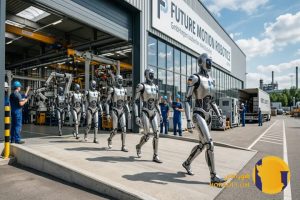
Future workplaces will likely combine human and AI capabilities. Agents will handle repetitive execution while humans guide strategy. Collaboration rather than replacement may define many environments.
Digital coworkers could become standard across knowledge industries. Employees may manage teams that include autonomous agents. This changes how organizations structure work and productivity.
Decision-making processes may become faster and more data-driven. AI systems will provide insights and recommendations continuously. Humans will remain responsible for final accountability.
The workplace of 2030 may look dramatically different from today. Yet human creativity and leadership will remain indispensable. Technology will reshape work, not eliminate human contribution entirely.
High-Authority Sources on Agentic AI
- World Economic Forum reports extensively on AI, automation, and workforce transformation.
- OECD publishes research on AI governance, labor markets, and productivity.
- National Institute of Standards and Technology provides widely recognized guidance on AI risk management and governance.
Final Verdict
Agentic AI is not simply another automation trend. It represents a fundamental shift in how work is performed, managed, and optimized across industries. The technology is increasingly capable of executing routine and semi-complex tasks with minimal human intervention.
While repetitive work faces growing automation pressure, the evidence suggests that human roles are evolving rather than disappearing entirely. Critical thinking, creativity, leadership, and emotional intelligence are becoming more valuable as AI handles operational execution.
The organizations and professionals most likely to succeed in the coming decade will be those who learn to collaborate effectively with AI agents. Rather than signaling the end of work, Agentic AI appears poised to redefine work itself. Agentic AI The End of Routine Work?
FAQ
1. What is Agentic AI in simple terms?
Agentic AI refers to autonomous AI systems that can plan, make decisions, and complete tasks with limited human supervision while pursuing specific objectives.
2. Will Agentic AI replace human workers?
Agentic AI is more likely to automate repetitive tasks than eliminate all jobs. Many roles will evolve toward supervision, strategy, creativity, and decision-making.
3. Which industries are adopting Agentic AI fastest?
Finance, healthcare, technology, retail, customer service, and enterprise software sectors are among the fastest adopters of AI agents in 2026.
4. What skills are most important in an AI-driven workplace?
Critical thinking, creativity, communication, leadership, emotional intelligence, and AI collaboration skills are becoming increasingly valuable.
5. How can businesses prepare for Agentic AI adoption?
Organizations should start with pilot projects, establish governance frameworks, train employees, strengthen security practices, and continuously evaluate AI performance and risks.