Physical AI Robots Leave the Factory

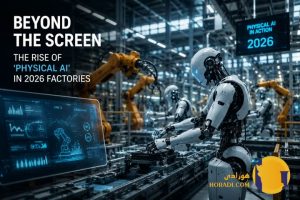
Physical AI has reached a turning point in 2026. For decades, robots were largely confined to controlled factory environments where tasks remained predictable and repetitive.
Today, advances in artificial intelligence, sensors, simulation software, and edge computing are allowing robots to operate in dynamic real-world settings. These systems can perceive, reason, and adapt in ways previously impossible.
The shift is creating new opportunities across healthcare, logistics, retail, construction, agriculture, and consumer markets. Companies are racing to commercialize robots that can safely interact with people and navigate complex environments.
Investors, businesses, and policymakers are paying close attention because physical AI may become one of the largest technology markets of the next decade. The transition from factory floors to everyday life is already underway. Technology ai News
Key Takeaways
- Physical AI robots are expanding beyond industrial manufacturing.
- Advances in AI models, sensors, and robotics hardware are accelerating deployment.
- Healthcare, logistics, agriculture, and retail are leading adoption sectors.
- Humanoid robots are gaining commercial traction in 2026.
- Labor shortages are increasing demand for autonomous systems.
- Major technology firms are investing heavily in embodied AI platforms.
- Safety, regulation, and trust remain critical challenges.
- Physical AI could become a multi-trillion-dollar global industry.
What Is Physical AI?
Physical AI refers to artificial intelligence systems that interact directly with the physical world through robotic bodies, sensors, and actuators. Unlike software-only AI, these systems must understand and respond to real-world conditions.
The concept combines machine learning, computer vision, natural language processing, and robotics. Together, these technologies allow machines to perform tasks requiring perception and movement.
Modern robots increasingly rely on foundation models trained using massive datasets. This enables more generalized behavior compared with traditional rule-based robotic systems.
As a result, robots are becoming more flexible and capable of handling unfamiliar environments. That flexibility is what allows them to leave factory settings and enter broader markets.
Why 2026 Marks a Major Turning Point
Several technological breakthroughs have converged to accelerate physical AI adoption. Computing power, AI models, and robotic hardware have all improved significantly over the past few years.
Companies can now train robots inside highly realistic simulation environments before deploying them in the real world. This reduces development costs and improves safety.
At the same time, labor shortages across multiple industries have created strong economic incentives. Businesses are searching for automation solutions that extend beyond traditional machinery.
Investors also see enormous potential in embodied intelligence. Capital flowing into robotics startups has increased substantially as commercialization opportunities expand globally.
The Rise of Humanoid Robots
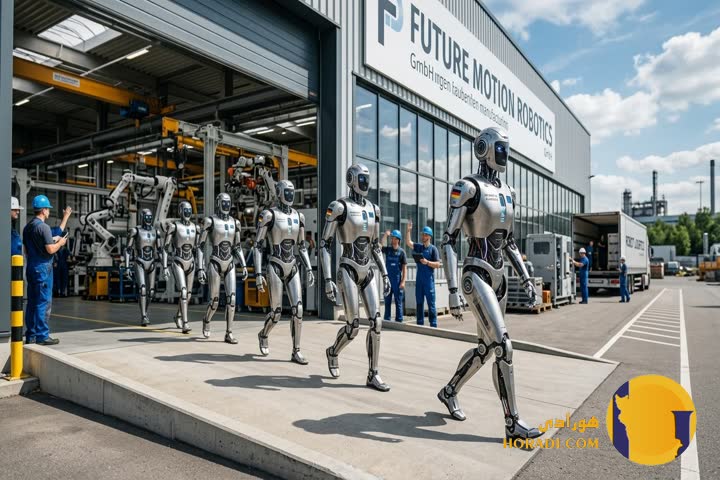
Humanoid robots have become one of the most discussed segments within physical AI. Their human-like form allows them to operate in environments already designed for people.
Instead of redesigning workplaces, organizations can deploy robots capable of using existing tools, equipment, and infrastructure. This lowers implementation barriers significantly.
Recent improvements in balance, mobility, dexterity, and reasoning have made humanoid robots more practical. Many can now perform complex multi-step tasks with minimal supervision.
While large-scale deployment remains early, pilot programs are expanding rapidly. Warehouses, factories, and service industries are testing humanoid workers at unprecedented levels.
How AI Is Transforming Logistics
The logistics industry has become one of the biggest beneficiaries of physical AI. Warehouses increasingly use autonomous robots to move products and optimize inventory management.
These systems operate continuously while reducing repetitive manual work. AI-driven planning also improves route efficiency and fulfillment speed.
Autonomous mobile robots can collaborate with human workers safely. Their ability to adapt to changing warehouse conditions provides major operational advantages.
As e-commerce demand continues growing, intelligent robotics offers a scalable solution. Logistics providers view automation as essential for maintaining competitiveness.
Logistics Benefits
| Benefit | Impact |
|---|---|
| Faster Fulfillment | Reduced delivery times |
| Labor Efficiency | Improved productivity |
| Inventory Accuracy | Fewer operational errors |
| Scalability | Easier expansion |
Healthcare Robots Enter Real-World Settings
Healthcare organizations are increasingly adopting physical AI technologies. Robots now assist with logistics, patient monitoring, sanitation, and surgical procedures.
AI-powered systems can transport supplies across hospitals while reducing staff workload. This allows healthcare professionals to focus on higher-value patient care.
Robotic surgery platforms continue improving precision and consistency. Enhanced imaging and AI guidance support better procedural outcomes in selected cases.
As populations age globally, healthcare providers face growing staffing challenges. Physical AI may help address workforce shortages while improving operational efficiency.
Agriculture Embraces Intelligent Automation
Agriculture is experiencing a robotics revolution driven by labor constraints and sustainability goals. Autonomous machines are helping farmers improve productivity and resource management.
Computer vision systems can identify weeds, pests, and crop health issues with remarkable accuracy. This enables more targeted interventions across large farming operations.
AI-powered harvesting robots are becoming increasingly capable. Their ability to work continuously improves efficiency during critical harvest periods.
Precision agriculture technologies also reduce water, fertilizer, and chemical usage. These improvements support both economic and environmental objectives.
Retail and Customer-Facing Robotics
Retailers are exploring new ways to integrate physical AI into stores and fulfillment operations. Robots increasingly assist with inventory tracking and shelf monitoring.
Computer vision systems can identify stock shortages in real time. This helps businesses maintain product availability and improve customer experiences.
Some organizations are testing customer service robots that provide information and navigation assistance. These deployments remain limited but continue expanding.
Retail automation is expected to increase as technology costs decline. Businesses are seeking solutions that improve efficiency without sacrificing service quality.
Common Retail Applications
- Inventory scanning
- Shelf monitoring
- Store navigation assistance
- Automated fulfillment
- Loss prevention analytics
The Technology Behind Embodied Intelligence
Modern physical AI relies on several interconnected technologies. Sensors, cameras, lidar systems, and advanced processors provide environmental awareness.
Large AI models help robots understand language, objects, and tasks. These capabilities improve decision-making in complex situations.
Simulation platforms play a critical role in training robotic systems. Virtual environments allow rapid learning while minimizing real-world risks.
Edge computing further enhances performance by enabling faster local processing. This reduces latency and supports real-time decision-making.
Safety and Regulatory Challenges
Despite rapid progress, significant challenges remain. Physical AI systems must operate safely around people in unpredictable environments.
Regulators are working to establish standards for deployment, accountability, and risk management. Clear frameworks are essential for widespread adoption.
Cybersecurity represents another major concern. Connected robots could become targets for malicious attacks if protections are inadequate.
Public trust will also influence long-term success. Companies must demonstrate that robots are reliable, transparent, and beneficial to society.
The Investment Opportunity
Physical AI has become a major focus for venture capital firms and institutional investors. Market participants view robotics as a foundational technology trend.
Investment is flowing into hardware manufacturers, software developers, semiconductor companies, and AI infrastructure providers. The ecosystem continues expanding rapidly.
Public markets are also showing growing interest in robotics-related businesses. Investors are seeking exposure to long-term automation growth.
Many analysts believe physical AI could rival previous technology revolutions. The commercial potential spans numerous industries and geographic regions.
Which Companies Are Leading the Race?
Several major technology and robotics companies are driving innovation. Competition is intensifying as organizations pursue leadership positions in embodied AI.
Key participants include NVIDIA, Tesla, Boston Dynamics, Figure AI, Agility Robotics, and numerous emerging startups. Each focuses on different market opportunities.
Cloud providers and semiconductor manufacturers also play critical roles. Their infrastructure supports AI training and robotic deployment at scale.
Strategic partnerships are becoming increasingly important. Collaboration between AI developers, robotics firms, and industrial operators accelerates commercialization.
Industry Leaders Driving Physical AI
- NVIDIA
- Tesla
- Figure AI
- Agility Robotics
- Boston Dynamics
- ABB
- Siemens
- Amazon Robotics
High-Authority Sources Tracking Physical AI
The most reliable information on physical AI and robotics developments comes from respected research institutions and industry organizations. These sources provide ongoing analysis and data.
Important references include the International Federation of Robotics (IFR), which tracks global robotics adoption trends and market statistics.
Additional insights come from McKinsey & Company research on automation and workforce transformation. Academic research from institutions such as MIT also contributes valuable analysis.
Together, these organizations help businesses and investors understand the evolving robotics landscape. Their findings support evidence-based decision-making across the industry.
Final Verdict
Physical AI robots are no longer limited to factory floors. Advances in artificial intelligence, simulation, sensing, and robotics hardware are enabling deployment across healthcare, logistics, agriculture, retail, and many other sectors.
The movement toward embodied intelligence represents one of the most important technology shifts of the decade. Businesses are adopting robotic systems to address labor shortages, improve efficiency, and unlock new capabilities.
While challenges involving safety, regulation, and public trust remain, the momentum behind physical AI continues to grow. The technology is steadily moving from experimental pilots to real-world commercial operations.
For investors, enterprises, and policymakers, 2026 marks the beginning of a new era in which intelligent machines increasingly participate in everyday economic activity. Physical AI Robots Leave the Factory
FAQ
1. What is a physical AI robot?
A physical AI robot is a machine that combines artificial intelligence with sensors and mechanical systems to interact with and perform tasks in the real world.
2. Why are physical AI robots leaving factories in 2026?
Advances in AI models, simulation technology, computing power, and robotics hardware have made it possible for robots to operate safely in less predictable environments.
3. Which industries are adopting physical AI the fastest?
Healthcare, logistics, agriculture, manufacturing, retail, and construction are among the fastest-growing sectors for physical AI deployment.
4. Are humanoid robots commercially viable today?
Humanoid robots are beginning to enter commercial pilot programs, particularly in logistics and industrial settings, though widespread deployment is still developing.
5. What companies are leading the physical AI revolution?
Major innovators include NVIDIA, Tesla, Figure AI, Agility Robotics, Boston Dynamics, ABB, Siemens, and Amazon Robotics, along with numerous emerging startups.