
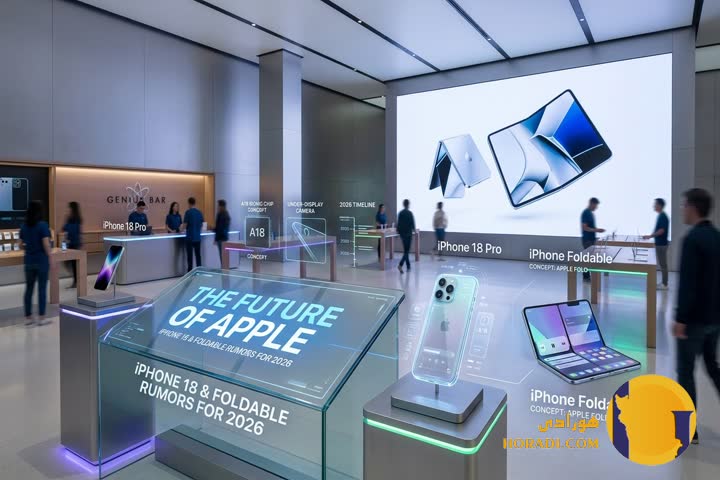
The Future of Apple Top iPhone 18 and Foldable Rumors for 2026

Apple’s 2026 roadmap is shaping up to be one of the most disruptive cycles in modern smartphone history. With the iPhone 18 series and long-rumored foldable iPhone gaining momentum, expectations are reaching new highs. Analysts suggest Apple is preparing a strategic leap rather than an incremental upgrade cycle. Technology
Unlike previous generations, the focus is no longer just performance gains or camera refinements. The conversation has shifted toward form factor innovation, on-device AI, and ecosystem expansion. This positions Apple at the center of a potential smartphone paradigm shift.
Key Takeaways
- iPhone 18 is expected to emphasize AI-first architecture and efficiency gains
- Foldable iPhone rumors suggest a premium hybrid device targeting ultra-high-end users
- Apple may introduce next-gen display and battery efficiency technologies
- Competition from Samsung, Google, and Huawei is accelerating foldable adoption
- Pricing and segmentation could expand Apple’s premium ecosystem further
Apple 2026 Roadmap and iPhone 18 Strategy
Apple’s roadmap for 2026 indicates a deeper focus on ecosystem intelligence. The iPhone 18 series is expected to align tightly with Apple Intelligence features. This suggests hardware designed specifically to maximize on-device AI processing.
Industry leaks point toward a staggered release strategy across multiple models. Standard, Pro, and Ultra variants may further widen performance differentiation. This segmentation helps Apple maintain premium pricing power globally.
According to analysts at Bloomberg and Ming-Chi Kuo reports, Apple is prioritizing efficiency over raw hardware specification wars. This aligns with broader industry shifts toward integrated AI ecosystems.
The iPhone 18 could serve as the foundation for Apple’s next decade strategy. It may represent the bridge between traditional smartphones and hybrid AI devices. This evolution is central to Apple’s long-term revenue stability model.
Design Evolution and Premium Material Shift
The iPhone 18 design language is expected to evolve toward thinner, lighter frames. Titanium refinement and advanced glass composites are strongly rumored. Apple is likely targeting improved durability without increasing device weight.
Some leaks suggest a near-bezel-less design approach for Pro models. This could push Apple closer to a fully immersive front display experience. Design consistency across the lineup will remain a key brand priority.
A growing focus is also placed on thermal efficiency and internal space optimization. This enables stronger chip performance without overheating constraints. It also supports the demands of advanced AI workloads.
A potential design shift may prepare the ecosystem for foldable integration. Structural engineering changes could lay the foundation for flexible hardware. This represents a long-term architectural transition, not just cosmetic updates.
Display Technology Breakthroughs
Apple is expected to push LTPO OLED technology further in the iPhone 18 lineup. Adaptive refresh rates could become more granular and energy-efficient. This improves both performance fluidity and battery longevity.
There are ongoing rumors about microLED development accelerating internally. While unlikely for full rollout in 2026, prototypes may appear in high-end models. This would dramatically improve brightness and color accuracy.
Display durability is also a major engineering focus area. Stronger scratch resistance and reduced burn-in risks are expected improvements. Apple is working closely with suppliers like Samsung Display and LG Display.
Foldable-compatible display layers are reportedly in early validation stages. These materials must balance flexibility with long-term structural integrity. This is a critical step toward Apple’s foldable iPhone ambitions.
Chipset Power A20 and Beyond
The iPhone 18 is widely expected to feature the A20 chip series. Built on an advanced 2nm-class architecture, efficiency gains are a priority. This enables stronger AI performance with lower energy consumption.
CPU and GPU improvements will likely focus on sustained performance. This reduces throttling during gaming and professional workloads. Apple continues to optimize silicon for long-term performance stability.
Neural Engine upgrades are central to Apple Intelligence expansion. On-device AI tasks will become faster and more context-aware. This reduces dependency on cloud processing systems.
Benchmark expectations suggest noticeable gains in both speed and efficiency. However, Apple’s focus remains real-world usage rather than synthetic scores. This aligns with its ecosystem-first product philosophy.
Apple Intelligence and On-Device AI Expansion
Apple Intelligence is expected to reach full maturity in the iPhone 18 generation. On-device processing will become significantly more capable and responsive. This reduces latency across Siri, apps, and system-level tasks.
Privacy-focused AI remains a core Apple differentiator. Most data processing will occur locally on the device. This strengthens Apple’s positioning in privacy-conscious markets.
AI-driven personalization will extend across apps and services. Users may experience adaptive interfaces based on behavior patterns. This enhances productivity and usability across the ecosystem.
Developers will gain deeper access to AI frameworks. This could lead to a new generation of intelligent third-party apps. Apple’s App Store ecosystem may see another major transformation.
Camera System and Computational Photography Leap
The iPhone 18 camera system is expected to push computational photography further. Improved low-light performance and sensor fusion are key focus areas. Apple continues refining its multi-lens imaging pipeline.
Pro models may introduce enhanced periscope zoom capabilities. This would significantly improve long-range photography performance. Competitors like Samsung are already driving this segment forward.
Video recording improvements will likely target professional workflows. Higher dynamic range and improved stabilization are expected upgrades. This strengthens Apple’s dominance in mobile video production.
AI-enhanced editing tools may be integrated directly into the camera app. This allows real-time adjustments and automated enhancements. It reflects Apple’s broader AI integration strategy.
Foldable iPhone Rumors and Engineering Challenges
The foldable iPhone remains one of the most anticipated Apple products. Leaks suggest a book-style folding design similar to premium competitors. However, Apple is expected to differentiate through refinement and durability.
Engineering challenges include hinge reliability and display crease reduction. Apple is reportedly investing heavily in proprietary hinge mechanisms. This is critical for long-term device lifespan and user trust.
Battery distribution in foldable formats is another complex issue. Dual-cell architectures may be required for balanced performance. This ensures consistent power delivery across both display sections.
If launched, the foldable iPhone would target ultra-premium users. Pricing is expected to exceed even current Pro Max models significantly. This positions it as a niche but high-margin product category.
Battery Technology and Charging Innovation
Battery improvements in the iPhone 18 lineup focus on energy density gains. Silicon-based anode enhancements may improve overall capacity efficiency. This supports longer usage without increasing physical battery size.
Charging speeds are expected to improve moderately rather than drastically. Apple continues to prioritize battery longevity over extreme fast charging. This aligns with its long-term device health strategy.
Thermal management improvements also contribute to better battery performance. Advanced heat dissipation systems reduce degradation risks. This ensures sustained efficiency under heavy workloads.
Foldable models may require entirely new battery layouts. Flexible internal structures are essential for maintaining balance. This adds another layer of engineering complexity.
iOS 20 Integration and Ecosystem Expansion
The iPhone 18 is expected to launch alongside iOS 20. This version may represent one of Apple’s most AI-integrated operating systems. System-wide intelligence will likely redefine user interaction patterns.
Cross-device continuity will become even more seamless. Apple’s ecosystem will further unify iPhone, Mac, and Vision Pro experiences. This strengthens long-term user retention.
New customization layers may finally expand beyond current limitations. Users could see more dynamic home screens and adaptive widgets. This brings iOS closer to flexible personalization standards.
Security and privacy enhancements remain a core focus. AI features will be designed with strict on-device processing rules. This maintains Apple’s regulatory and consumer trust advantages.
Market Competition and Industry Pressure
The smartphone market in 2026 is becoming increasingly competitive. Samsung, Google, and Huawei are aggressively pushing foldable innovation. This forces Apple to respond strategically rather than reactively.
Foldable adoption is growing in premium segments globally. However, mainstream penetration remains limited due to cost barriers. Apple may aim to solve usability and durability concerns.
AI integration is another major competitive battleground. Companies are racing to define the next-generation mobile experience. Apple’s advantage lies in hardware-software integration depth.
Market analysts from Bloomberg and Counterpoint Research suggest Apple’s entry into foldables could rapidly reshape the segment. It would likely validate the category for mass premium adoption.
Pricing Strategy and Product Segmentation
Apple’s pricing strategy for iPhone 18 is expected to remain premium-focused. Inflation, materials, and AI hardware may push costs slightly higher. However, Apple typically preserves margin through value segmentation.
The Pro and Ultra tiers may see increased differentiation. This encourages users to move toward higher-margin models. It strengthens Apple’s average selling price across markets.
Foldable iPhone pricing could introduce a new ultra-premium tier. This may position it above current Pro Max pricing significantly. It becomes a halo product for brand prestige.
Storage and subscription bundles may also expand. Apple services integration will likely play a larger role in revenue. This shifts Apple further toward recurring income models.
Supply Chain and Manufacturing Outlook
Apple’s supply chain remains one of the most optimized globally. For iPhone 18, diversification across India and Vietnam continues expanding. This reduces dependency on single-region manufacturing risks.
Advanced chip production will likely rely on TSMC’s cutting-edge nodes. This ensures performance leadership in mobile processors. It also maintains Apple’s competitive advantage in silicon design.
Foldable device production introduces new manufacturing complexity. Specialized assembly lines are required for flexible components. This may initially limit production volume at launch.
Component sourcing challenges could impact early availability. However, Apple’s supplier relationships help stabilize output. This ensures consistent global rollout over time.
Final Verdict
The iPhone 18 and foldable Apple device rumors signal a major strategic shift. Apple appears to be transitioning from incremental upgrades to structural innovation. This includes AI-first computing, new form factors, and deeper ecosystem integration.
While foldable adoption remains uncertain in timing, Apple’s entry would likely redefine the category entirely. The combination of hardware refinement and software intelligence is central.
Key sources shaping these expectations include Bloomberg reporting, Ming-Chi Kuo supply chain analysis, and Apple’s own developer ecosystem updates. Together, they point toward a transformative 2026 cycle.
FAQ
1. Will the iPhone 18 support advanced AI features? Yes, it is expected to deeply integrate Apple Intelligence. On-device AI processing will be a core feature.
2. Is Apple releasing a foldable iPhone in 2026? It is still unconfirmed, but strong industry leaks suggest development is ongoing. A launch could happen later in the cycle or beyond.
3. What chip will the iPhone 18 use? It is expected to feature the A20 or A20 Pro chip series. Built on next-generation advanced semiconductor architecture.
4. How will the iPhone 18 differ from iPhone 17? Major upgrades will likely focus on AI, efficiency, and design evolution. Not just incremental performance improvements.
5. Will foldable iPhone be expensive? Yes, it is expected to be a premium ultra-high-end device. Pricing may exceed current Pro Max models significantly.