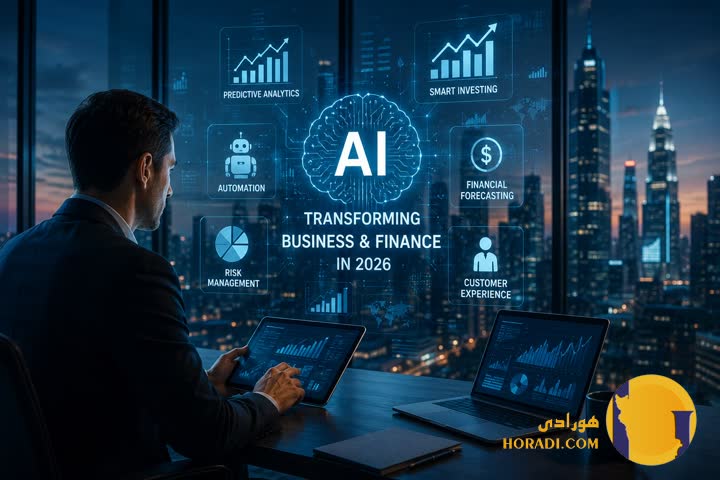
How AI Is Transforming Business and Finance in 2026

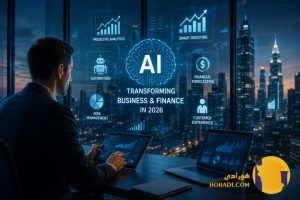
Financial markets in 2026 rely heavily on data processing capabilities. AI systems can evaluate market signals, economic reports, and investor sentiment at extraordinary speeds. This capability has created a new generation of data-driven investment strategies.
Algorithmic trading has existed for years, but AI is making these systems more adaptive. Machine learning models can identify complex patterns that traditional statistical methods may overlook. Investment companies are using these insights to improve portfolio management.
Hedge funds and asset managers are investing heavily in AI infrastructure. The competitive advantage increasingly depends on access to high-quality data and advanced computing resources. Firms without AI capabilities risk falling behind faster-moving competitors.
BlackRock has expanded technology-driven investment solutions, including AI-supported research and analytics tools. Other major financial institutions are similarly exploring AI applications across asset management and risk analysis. The financial industry is entering an era where technology expertise is becoming as important as traditional market knowledge.
AI Automation Is Changing Business Productivity
Automation has always been part of business innovation, but AI has expanded what machines can accomplish. Modern AI systems can handle complex tasks involving language, decision support, and pattern recognition. This creates opportunities for businesses of every size.
Small companies are using AI tools to compete with larger organizations. A startup can automate customer support, analyze competitors, and manage marketing campaigns with limited resources. AI is reducing barriers that previously required large teams and significant budgets.
Large corporations are redesigning entire workflows around AI capabilities. Instead of adding AI to existing processes, many companies are rebuilding operations from the ground up. This approach creates deeper efficiency gains.
| Traditional Process | AI-Enhanced Process |
|---|---|
| Manual data analysis | Automated insights |
| Basic customer support | Intelligent virtual agents |
| Slow reporting cycles | Real-time dashboards |
| Human-only forecasting | Predictive models |
The productivity impact of AI depends on implementation quality. Companies that invest in employee training and data infrastructure usually achieve stronger results. Technology alone cannot create transformation without effective business strategy.
AI Risk Management and Fraud Prevention in 2026
Cybersecurity and fraud prevention have become critical areas for AI adoption. As digital transactions increase, companies face increasingly sophisticated financial threats. AI provides faster detection methods than traditional security systems.
Machine learning models analyze unusual activities across banking networks, payment platforms, and corporate systems. These models continuously improve by learning from new threat patterns. This creates a dynamic defense system against evolving attacks.
Insurance companies are also using AI for risk assessment. AI models evaluate customer information, environmental factors, and historical data to improve pricing decisions. The result is more accurate risk prediction.
Major organizations are balancing AI innovation with governance requirements. Regulators and industry groups are focusing on transparency, accountability, and responsible deployment. Companies must ensure that AI decisions remain explainable and secure.
The Role of AI Data Analytics in Business Strategy
Data has become one of the most valuable assets in modern business. AI analytics allows companies to transform large datasets into actionable intelligence. Executives can make decisions based on current market conditions rather than outdated reports.
Retail companies use AI analytics to predict customer demand and optimize inventory. Manufacturers apply predictive models to reduce equipment failures and improve production schedules. Financial firms use analytics to evaluate investments and economic trends.
The difference between traditional analytics and AI analytics is speed and complexity. Traditional systems often describe what happened in the past. AI systems increasingly predict what may happen next.
| Industry | AI Analytics Example |
|---|---|
| Retail | Demand forecasting |
| Healthcare | Patient risk prediction |
| Finance | Market analysis |
| Manufacturing | Predictive maintenance |
Companies with strong data strategies are better positioned to benefit from AI. Poor-quality data can limit AI performance and create inaccurate outcomes. Data management has become a fundamental business priority.
AI in Customer Experience and Personalization
Customer expectations have changed significantly as AI becomes part of everyday digital experiences. Consumers now expect faster responses, personalized recommendations, and seamless interactions. Businesses are using AI to meet these expectations.
E-commerce platforms rely on AI recommendation systems to suggest products based on customer behavior. Streaming services use similar technologies to personalize entertainment experiences. Financial apps apply AI to provide customized money management advice.
Customer service has experienced one of the most visible AI transformations. AI chat systems can handle common requests while allowing human agents to focus on complicated cases. This creates faster service without removing human support completely.
The strongest customer experiences combine automation with empathy. AI can process information quickly, but human communication remains important for sensitive situations. Companies that understand this balance are creating stronger customer relationships.
AI Regulations and Responsible Business Adoption
The rapid growth of artificial intelligence has increased demand for responsible technology practices. Businesses must consider privacy, security, transparency, and ethical concerns. AI adoption without proper governance can create operational and reputational risks.
Governments and international organizations are developing frameworks to guide AI development. The National Institute of Standards and Technology has published AI risk management guidance to help organizations manage potential challenges. Companies are increasingly creating internal AI governance teams.
Responsible AI involves more than regulatory compliance. Organizations must evaluate how AI systems use data and influence decisions. Trust has become a competitive advantage in the AI economy.
Businesses investing in ethical AI practices are better prepared for long-term growth. Clear policies, human oversight, and security controls improve confidence among customers and employees. The future of AI depends on responsible implementation.
The Economic Impact of AI Across Global Industries
AI is expected to create significant economic changes throughout the decade. Businesses are investing in AI because of potential improvements in productivity, innovation, and competitiveness. The technology is influencing nearly every major industry.
The International Monetary Fund has analyzed AI’s potential impact on labor markets and economic productivity. Its research highlights both opportunities and challenges as businesses adapt to automation. Companies must prepare workers for changing roles.
Some jobs will be transformed rather than simply eliminated. AI is creating demand for professionals who can manage technology, analyze information, and design new processes. The workforce of 2026 increasingly requires digital and analytical skills.
Industries adopting AI strategically are likely to gain long-term advantages. The biggest winners will not necessarily be companies with the most advanced algorithms. They will be organizations that integrate AI effectively into business operations.
The Future of AI-Powered Businesses Beyond 2026
The next phase of AI development will focus on deeper integration across business systems. Companies are moving toward autonomous workflows where AI manages complex processes. Human leadership will remain essential for vision, ethics, and strategic decisions.
AI agents are expected to become more common in enterprise environments. These systems can complete multi-step tasks, coordinate information, and support employees. Businesses are exploring how these technologies can increase efficiency.
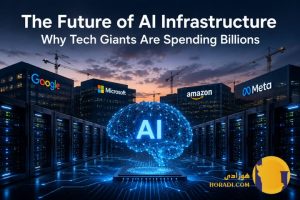
Cloud computing, advanced chips, and AI infrastructure will continue supporting this transformation. Technology companies are investing billions into AI development and computing capacity. The competition for AI leadership is becoming a major economic trend.
The future business landscape will belong to organizations that adapt quickly. AI is not simply another software upgrade but a fundamental shift in how companies operate. Businesses that embrace intelligent systems responsibly will define the next decade.
High-Authority Sources and Industry References
- Stanford Institute for Human-Centered Artificial Intelligence — Annual AI Index reports tracking global AI trends, investment, and adoption.
- International Monetary Fund — Research on AI’s impact on productivity, employment, and global economic systems.
- National Institute of Standards and Technology — AI risk management frameworks and responsible AI guidance.
Final Verdict AI Is Becoming the Core Engine of Modern Business
Artificial intelligence in 2026 is no longer a technology experiment reserved for large corporations. It has become a practical business tool influencing finance, operations, customer service, and strategic planning. Organizations that integrate AI effectively are gaining measurable advantages.
The biggest transformation is not replacing human intelligence but expanding human capability. Companies that combine skilled employees with powerful AI systems will create stronger products and smarter decisions. The future belongs to businesses that treat AI as a strategic foundation.
Frequently Asked Questions
How is AI transforming businesses in 2026?
AI is transforming businesses by automating workflows, improving decision-making, analyzing data, and creating personalized customer experiences. Companies across industries are using AI to increase efficiency and competitiveness.
What role does AI play in finance in 2026?
AI helps financial institutions detect fraud, evaluate risks, analyze markets, automate customer service, and create personalized investment solutions. Banks and investment firms increasingly rely on AI-driven insights.
Will AI replace human workers in the future?
AI is expected to change many jobs rather than completely replace human workers. Professionals who use AI tools effectively will likely gain advantages as businesses redesign their workflows.
Why is AI important for small businesses in 2026?
AI allows small businesses to access advanced capabilities such as marketing automation, customer analysis, and financial forecasting without requiring large teams or expensive infrastructure.
What are the biggest challenges of AI adoption?
The biggest challenges include data privacy, cybersecurity risks, regulatory compliance, implementation costs, and ensuring that AI systems operate transparently and responsibly.