
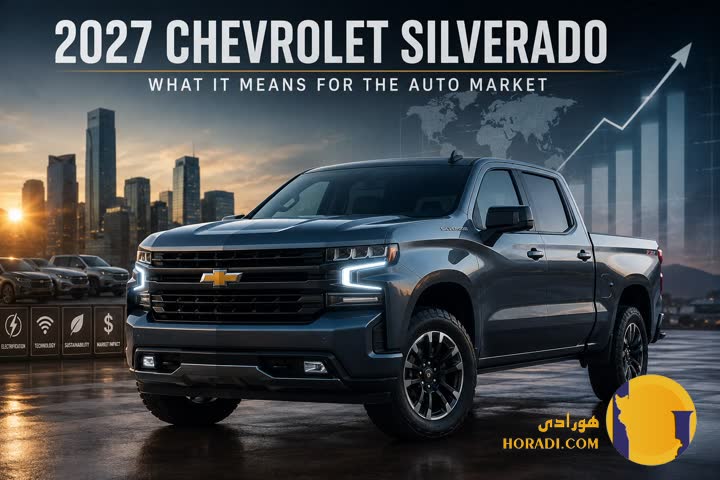
2027 Chevrolet Silverado What It Means for the Auto Market

The 2027 Chevrolet Silverado arrives at a moment of transition for the U.S. auto industry. Pickup trucks are no longer just workhorses; they are tech and energy platforms. That shift changes how manufacturers compete and price vehicles.
For General Motors, the Silverado remains a core profit engine. But rising EV adoption and regulation pressure are reshaping its roadmap. This model year signals a strategic balancing act.
Analysts from Kelley Blue Book and Edmunds expect continued segmentation in truck demand. ICE, hybrid, and EV variants will likely coexist longer than expected. That complexity defines the 2027 outlook.
The broader market impact extends beyond Detroit and into global supply chains. Investors are watching margins, battery costs, and fleet demand closely. The Silverado becomes a bellwether, not just a product. Market News
Key Takeaways
- 2027 Silverado reflects a multi-powertrain transition era
- EV, hybrid, and ICE trucks will coexist longer than expected
- GM is balancing profitability with electrification investment
- Pickup trucks are evolving into software-defined platforms
- Supply chain and battery costs remain critical market drivers
Design Evolution How the 2027 Silverado Redefines the Pickup Identity
The 2027 Silverado design language leans toward aerodynamic efficiency. Flat, boxy styling gives way to refined airflow-optimized surfaces. Functionality remains central, but form is now equally strategic.
Interior updates reflect a shift toward digital-first ergonomics. Large central displays and modular dashboards dominate the cabin layout. Physical controls are reduced but not eliminated entirely.
Material choices emphasize durability with a premium repositioning effort. Higher trims compete directly with luxury truck offerings from rivals. This is a calculated move to expand margin per unit.
Design is no longer just aesthetics—it is efficiency, branding, and compliance. Every surface is engineered with drag coefficients and sensor integration in mind. The Silverado becomes a rolling software and hardware ecosystem.
Powertrain Strategy ICE, Hybrid, and EV Coexistence
The 2027 Silverado lineup continues a diversified powertrain approach. Internal combustion remains central for fleet and heavy-duty buyers. However, hybrid variants now act as the transition bridge.
Electric models built on GM’s Ultium-based architecture gain traction. Range improvements and charging speed are key selling points. Still, infrastructure limits slow full EV dominance in pickups.
Performance tuning varies significantly across configurations. Torque delivery in EV models reshapes towing expectations. ICE engines retain appeal for long-haul commercial users.
The strategy reflects market reality rather than ideological shift. GM is hedging against uneven EV adoption across U.S. regions. This balance defines competitiveness in 2027.
Market Positioning vs Ford F-150 and RAM 1500
Competition with the Ford F-150 remains the defining battleground. Ford Motor Company continues to set benchmarks in fleet penetration. The Silverado responds with tech and trim diversification.
RAM 1500 pressures GM on interior refinement and ride comfort. Stellantis emphasizes premium cabin experience and smooth drivability. This forces Silverado to match expectations without losing utility focus.
Pricing strategy becomes more aggressive across mid-tier trims. Discounting cycles remain common in high-inventory segments. Market share stability matters more than short-term margin gains.
The 2027 cycle intensifies competition across all three truck giants. Each brand targets different emotional and functional buyer segments. The result is a fragmented but highly profitable market structure.
Electrification Pressure and Market Acceleration
Electrification is reshaping how pickup trucks are benchmarked. The Silverado EV variant pushes GM deeper into battery competition. Range, cost, and charging time define consumer acceptance.
EPA emissions standards continue tightening into 2027. This drives accelerated hybrid adoption across mid-size fleets. Compliance costs are now embedded into pricing models.
SAE International research highlights rapid torque advantage in EV trucks. Instant power delivery changes towing and acceleration expectations. This shifts what buyers define as “truck capability.”
The transition is uneven but irreversible in long-term projections. Manufacturers are adjusting production lines rather than resisting change. Silverado sits at the center of that industrial pivot.
Towing and Payload Expectations in a Multi-Energy Era
Towing capacity remains a core marketing battleground for Silverado. ICE variants still dominate maximum payload benchmarks. However, EV torque reshapes perception of capability.
Battery weight introduces trade-offs in payload efficiency. Engineers are optimizing frame materials and suspension geometry. This creates distinct performance tiers across the lineup.
Fleet buyers prioritize consistency over peak performance claims. Real-world towing data matters more than brochure specifications. This influences how GM communicates capability metrics.
Consumer expectations are evolving faster than regulation standards. Truck buyers now compare software and range alongside torque. That redefinition alters every product decision.
Interior Tech and Software-Defined Experience
The 2027 Silverado interior increasingly resembles a digital cockpit. Over-the-air updates enhance features after purchase. This shifts revenue toward lifecycle software services.
Infotainment systems integrate navigation, towing data, and diagnostics. Voice control accuracy improves through AI-driven calibration. Driver assistance becomes more context-aware and adaptive.
Subscription models expand across premium feature sets. This includes advanced towing assist and enhanced mapping tools. It reflects broader automotive software monetization trends.
Hardware remains important, but software defines differentiation. GM positions Silverado as a continuously evolving platform. That strategy mirrors broader tech industry behavior.
Fleet and Commercial Market Dynamics
Fleet buyers remain the backbone of Silverado sales volume. Utility companies and contractors prioritize uptime and reliability. Cost predictability matters more than feature innovation.
Telematics integration is now standard across fleet packages. Real-time monitoring reduces maintenance downtime significantly. This improves total cost of ownership calculations.
Electric fleet adoption is growing but uneven geographically. Urban fleets transition faster than rural operations. Charging infrastructure remains the limiting factor.
GM’s commercial strategy focuses on modular scalability. Different powertrains serve different operational profiles. This segmentation protects long-term fleet dominance.
Pricing Pressure and Affordability Trends
Pricing for full-size trucks continues its upward trajectory. The Silverado faces inflation in materials and battery costs. This pushes entry-level trims closer to mid-range pricing.
Incentives remain a stabilizing force in volatile demand cycles. Dealer discounts fluctuate based on regional inventory levels. This creates uneven consumer experiences nationwide.
Higher trims are increasingly insulated from affordability pressure. Luxury positioning allows stronger margin retention. Mid-tier buyers feel the most pricing tension.
Market analysts expect gradual normalization by late 2027. However, structural cost increases are unlikely to reverse. Affordability remains a long-term industry challenge.
Supply Chain and Manufacturing Realignment
Battery sourcing remains the most critical supply constraint. North American production capacity is expanding but still limited. This affects EV Silverado rollout pacing.
Chip availability has stabilized compared to earlier disruptions. However, advanced semiconductor demand continues rising. Automotive software complexity drives ongoing pressure.
GM manufacturing plants are being retooled for flexibility. Multi-powertrain assembly lines reduce production risk. This supports faster response to market demand shifts.
Logistics optimization focuses on regional production balance. Reducing cross-border dependency improves resilience. The Silverado benefits from localized supply strategies.
Regulatory Landscape EPA, NHTSA, and Industry Compliance
EPA emissions regulations remain central to product planning. Tighter CO₂ standards influence engine and hybrid design. Compliance is now integrated early in engineering cycles.
NHTSA safety requirements increasingly involve software oversight. Driver-assist systems face stricter validation protocols. This raises development costs across the industry.
SAE International standards guide autonomy and connectivity frameworks. These benchmarks shape how Silverado systems are built. Interoperability becomes a key engineering priority.
Regulation is no longer reactive—it is shaping design direction. Manufacturers must anticipate compliance years in advance. The Silverado reflects this forward-looking engineering model.
Consumer Demand Outlook for 2027 and Beyond
Consumer demand is splitting into distinct behavioral segments. Traditional truck buyers remain loyal to ICE configurations. Younger buyers show stronger interest in electrified models.
Lifestyle use cases are expanding beyond work applications. Trucks now serve as recreational and tech-integrated vehicles. This broadens Silverado’s addressable market base.
Economic conditions continue influencing purchase timing decisions. Interest rates and credit availability remain key variables. Demand elasticity is more pronounced than pre-2020 cycles.
Long-term projections suggest stable but evolving truck dominance. The Silverado adapts by expanding configuration diversity. This flexibility defines its market resilience.
Final Verdict
The 2027 Chevrolet Silverado represents more than a model update. It reflects a structural transformation in the U.S. pickup market. GM is navigating electrification, regulation, and consumer fragmentation simultaneously.
Its success will depend on balancing legacy ICE strength with EV innovation. Competitors like Ford and RAM ensure pressure remains intense. The Silverado’s role as a market indicator is now firmly established.
FAQ
What makes the 2027 Silverado different from previous models?
It introduces a stronger balance of ICE, hybrid, and EV options alongside expanded software features and updated design language.
Is the Silverado EV replacing traditional engines?
No, ICE and hybrid versions will continue alongside EV models due to uneven infrastructure and demand.
How does it compare to the Ford F-150?
The F-150 leads in fleet dominance, while Silverado focuses on diversification and tech-driven upgrades.
Will towing capacity improve in 2027?
Yes, especially in EV variants where torque delivery enhances performance, though payload trade-offs exist.
Is the Silverado becoming more expensive?
Yes, rising material and battery costs are pushing prices upward, especially in mid-tier trims.